

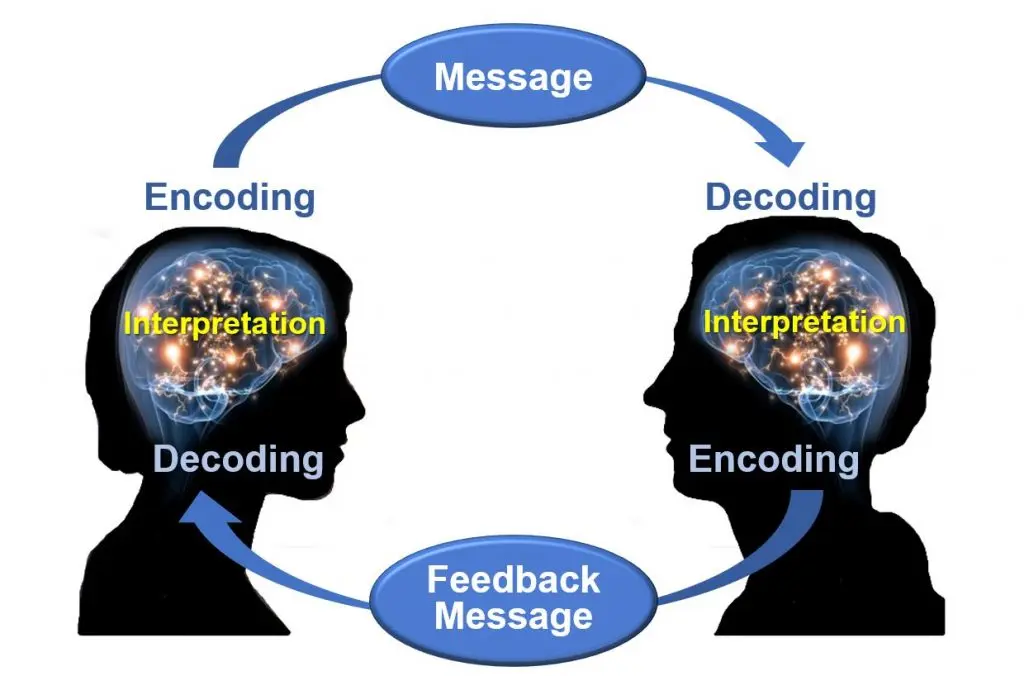
What is encoding/decoding?
In our daily lives, we encounter messages that are created by others, which we then interpret. Stuart Hall (1973), a cultural theorist, developed a model known as the encoding/decoding model of communication. This model has changed our understanding of communication, showing us that it is not as simple as we once believed. Instead, it resembles an assembly line of choices and interactions between producers and audiences, all aimed at conveying a message.
In 1973, Stuart Hall published his essay “Encoding and Decoding in the Television Discourse.” In this work, he explains the process of encoding, which refers to how creators, producers, and advertisers construct their messages. For instance, producers make specific choices regarding things such as the language used in a movie, the type of music used, or even the colour of a car. These decisions carry intentions that are embedded in them, with specific meanings and contexts selected by the producer.
A character’s red car might initially suggest they simply like the colour, but deeper analysis could reveal their aggressive or daring nature, as red often symbolises passion and boldness. This choice reflects the character’s identity and creators’ intent to connect with audiences, much like musicians craft emotional music to resonate with listeners. However, interpretations can vary, and meanings may not always align with the creator’s intentions.
Once the message has been encoded, it’s time for the audience to decode it. This message is open to interpretation by the audience.
Are we aware of what we’re doing?
According to Hall, the decoding process is not a passive act; instead, audiences actively engage with media content as they seek connections to it. This engagement may stem from personal life experiences—such as having owned a red car at some point or knowing someone who did—or from their individual preferences regarding content. Ultimately, the audience is making sense of what they are consuming in any way they can.
The 3 Ways
There are three primary ways that Hall identified audiences’ responses to decoding messages. The first is “Dominant-hegemonic Reading,” which occurs when the audience decodes the message exactly as the creator intended.
The second type is “Negotiated Reading,” where the audience accepts the intended message from the creator but interprets it in their own way.
The third is “Oppositional Reading,” in which the encoded message holds no meaning for the audience, leading them to reject it entirely. Instead, they interpret the message however they choose, even coming to an interpretation that is the exact opposite of what the creator intended.
Most of us have likely experienced all three types of audience responses at some point while consuming content. And we would have all done it differently as we all have different backgrounds and experiences that would affect how we interpret a certain message.
In conclusion, Hall’s encoding/decoding model has opened up a new area of interest regarding how we consume content and how it is created. This model has fostered a deeper understanding of the dynamic interactions between producers and consumers, which is significant in our daily media consumption.
References
Bødker, Henrik. “Stuart Hall’s encoding/decoding model and the circulation of journalism in the digital landscape.” Critical Studies in Media Communication, vol. 33, no. 5, 2016, pp. 409–423, https://doi.org/10.1080/15295036.2016.1227862.
Hall, S. (2019). [PART III Introduction]. In D. Morley (Ed.), Essential Essays, Volume 1: Foundations of Cultural Studies(pp. 247–256). Duke University Press. https://doi.org/10.2307/j.ctv11cw7c7.15Hall, S. (2019). [PART III Introduction]. In D. Morley (Ed.), Essential Essays, Volume 1: Foundations of Cultural Studies(pp. 247–256). Duke University Press. https://doi.org/10.2307/j.ctv11cw7c7.15


It’s an extremely excellent popular science article! It successfully expounds a complex communication theory with plain language and vivid examples (such as the red car). After reading it, I immediately thought of my experience when watching some movies: but I always felt that some plots had a wonderful resonance with my own experiences, giving me a unique understanding.