


BLOG 4: CHLOE CHAMBERS
I titled this blog “Male Monitor” to show how the male gaze has evolved from older media like photography and film to modern digital forms like the internet. The gaze is “a term that describes how viewers engage with visual media…The “male gaze” invokes the sexual politics of the gaze and suggests a sexualised way of looking that empowers men and objectifies women” (Simmons). A prime example would be in video games. With video games having such a heavily male-dominated player base, it is unsurprising that it means heavy misogyny, but in the same breath, objectification, “two common depictions of women in video games are damsels in distress – female victims to be rescued – or sex symbols – visions of beauty with large breasts and thin hips” (Lo). It’s the only time I personally have experienced discrimination based on a part of my identity multiple times, but I honestly just find it funny when it happens. The game I experience it in is Overwatch, which, when looking at the character designs alone, the male gaze isn’t that prominent, but when looking at the community behind it, it is blatant.
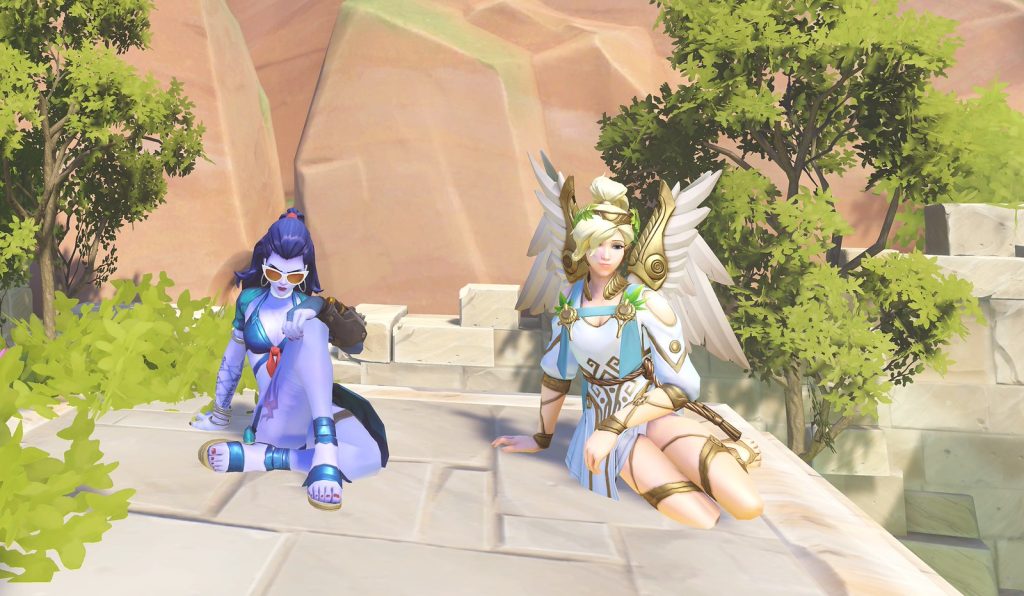
Whenever new cosmetics are released, the focus is always on how characters who fit the male gaze perfectly, like Widowmaker, look, rather than on the actual design itself compared to male characters. As for playing the game, whenever you speak and have a clearly feminine voice, you’re mocked, told not to play certain characters because you won’t have the skill, if you play badly, it is because you are a woman, or if you play a certain “unskilled” character like Mercy, you must be a woman. I think the game industry, especially when looking behind the scenes of these games like Overwatch, the male gaze stands strong, and the effects of it run rampant. For example, the company behind Overwatch, Blizzard, has its own experience with this: “It accused the gaming giant of having a “frat boy” culture, in which female employees are subjected to unequal pay, retaliation, and harassment, which it said the company was failing to prevent” (BBC). Overwatch tries to give a facade of inclusivity, but “Like any form of media, video games are shaped by and shape societal values” (Lo). And as we know, societal values are shaped by the male gaze for a male monitor. I think this is only amplified with the internet as people get more comfortable online. Content creators don’t even realize that they are prime examples of the male gaze when they view character design or use certain language while playing video games. This makes it even sadder because it doesn’t seem to be intentional for some; it just dissuades women from joining the community if even the faces of it perpetuate this harmful behavior. While I am painfully aware of how video games are designed for a male monitor, I do think, if even if only on the surface, slight changes are happening within the communities to be less male-centered, and men do sometimes tend to bash the misogynistic ones.
References
Source 1 – Reading Week 9
Source 2 – Through the Looking Glass: Gendered Gazes in Video Games
Source 3 – Activision Blizzard: More than 20 staff leave after harassment claims


Hi, as a video game lover, I like the way you use this as an example of the Male Gaze. Indeed, the “Male Monitor” of the digital age has evolved the male gaze from a cinematic perspective into an interactive, community-enforced dynamic, as exemplified by games like Overwatch. While character design may sometimes offer a facade of inclusivity, the community’s response to that design, the harassment within player interactions, and the toxic “frat boy” culture exposed at companies like Blizzard reveal how deeply the gaze is embedded. The internet amplifies this, allowing the objectification and discrimination to feel normalized and unintentionally perpetuated by creators. Although surface-level changes are beginning to emerge, the underlying societal values shaped by this digital gaze continue to create hostile environments that dissuade women, proving that the screen is now a powerful monitor for policing gender and power. I hope this occasion will improve in the future. Great work!
What I really appreciate about this blog is the way it connects the traditional idea of the male gaze with how it now appears in gaming culture and online communities. A lot of discussions about the male gaze stay stuck in film theory, so bringing it into spaces like Overwatch makes the argument feel much more grounded and relatable. The point about characters like Widowmaker and Mercy is especially sharp — you can immediately see how one is designed as a fantasy for the viewer while the other gets coded as “weak” or “unskilled,” and both roles end up reinforcing the same stereotypes.
What I find even more convincing is the personal anecdote about being told you “must be a woman” if you play certain characters or perform badly. These tiny micro-interactions say more about gendered expectations in gaming than any academic text. It shows how the male gaze isn’t just about visuals; it shapes how people judge skill, identity, and even who belongs in the space.
The part about Blizzard and its workplace scandals also adds weight to the whole argument. It’s one thing to point out biased character designs, but linking them to the company culture behind the scenes makes it feel less like an accident and more like a structural issue. The blog doesn’t just criticise players; it shows how games reflect the values of the people making them.
If anything, the piece could go even further in exploring how players themselves push back. You hint at this when you mention communities trying to make the game less male-centred, and I think expanding on that would make the post even stronger. Still, overall it’s a thoughtful and honest take on how deeply the male gaze runs through gaming culture today.
Hiya Chloe, Your post is really interesting and makes a lot of good points, especially about the way women are treated on online games, I feel like this has become normalised and treated as part of the experience over the past few years. However, I dont think this is new, female game characters have been notoriously sexualised since the 90s with Lara Croft, all the way to the present with the reception of Lucia in the GTA 6 trailers, which both have similar reactions, its hard to see much improvement over 30 years. In terms of online games, I think its building some pressure on women playing games to have to be exceptional to subvert the stereotype in order to not be harrassed online. I personally know many women who play online games refuse to have their microphone on and only use male characters to avoid this. Hopefully through people being exposed to the reality whats happening to women in the online gaming community, it will lead to change. Thank you for posting about quite an overlooked topic.