
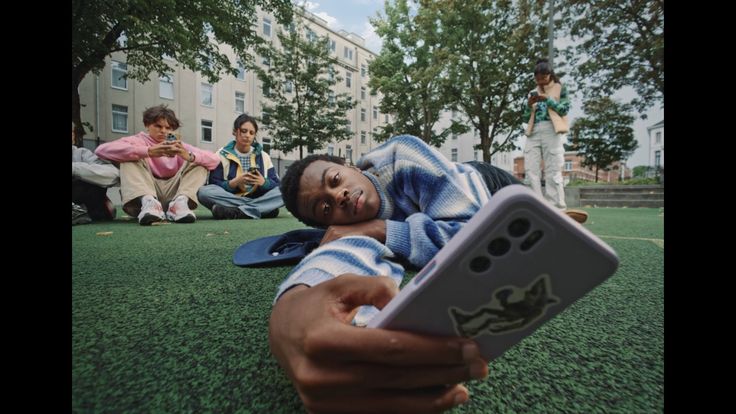
Identity is an important aspect of human life; it reflects who you are and how you choose describe yourself. Before the age of digital media, all we had were face-to-face interactions with family, friends, and the local community. With the introduction of technology and social media, however, new ways of presenting yourself appeared, where we no longer had to meet anyone in person to conversate, giving them an idea of who you are virtually. Through phone calls, carefully chosen social media posts, and curated online profiles, people share different versions of themselves, which could be completely different to who they are offline. This can make the differences between how someone appears in real life and the persona they choose to project themselves, shows how digital media has constructed our identity.
https://sl.bing.net/igwXOQFemGa
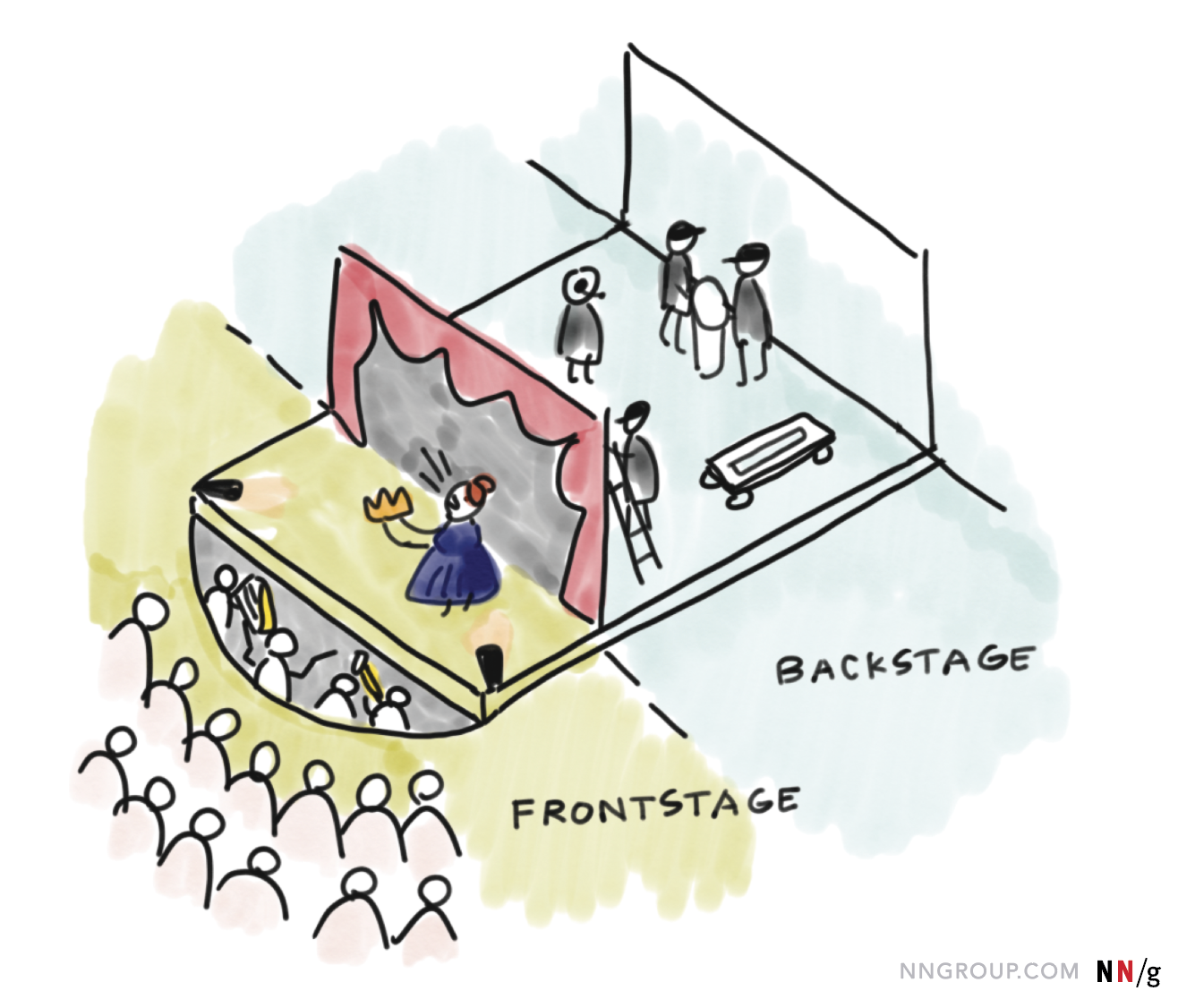
Erving Goffman, a highly influential sociologist, is key for understanding how identity is performed by people. For example, in his book ‘The Presentation of Self in Everyday Life’ (1959), Goffman argues that individuals change the way they speak, behave, and dress depending on the situation and the ‘audience’ so as to create the best feasible impression. He attempts to explain this through his ideas of ‘front stage’ and ‘backstage’ whereby the front stage represents the visible, performative self in a public setting, whereas the backstage reflects the private and concealed self, hidden from everyone. Impression management is not usually fake, but it can be, and it proves the shared social understanding of how we are expected to act, according to social norms. This raises an important question about whether we behave for our own sake or for the sake of ‘others.’ As Goffman writes, “a status… a social place… is not a material thing to be possessed… it is a pattern of appropriate conduct” (p. 75).
Moreover, Harold Garfinkel, a sociologist as well, focuses on the everyday world rather than the self itself. In ‘Studies in Ethnomethodology’ (1967), he writes, “In every discipline, humanistic or scientific, the familiar, common-sense world of everyday life is a matter of abiding interest… it exercises an odd and obstinated sovereignty over sociologists’ claims to an adequate explanation” (p. 36). He also emphasises that “there is no ‘‘time out’ from the parts we play… we are all of us called upon to enact… we are called upon to play ourselves ‘to the life’… for as long as we live” (p. 36). This is relevant to digital identity, as social media platforms like TikTok, Instagram, and X, make these everyday routines into online interactions, where identity is always enacted and perceived.
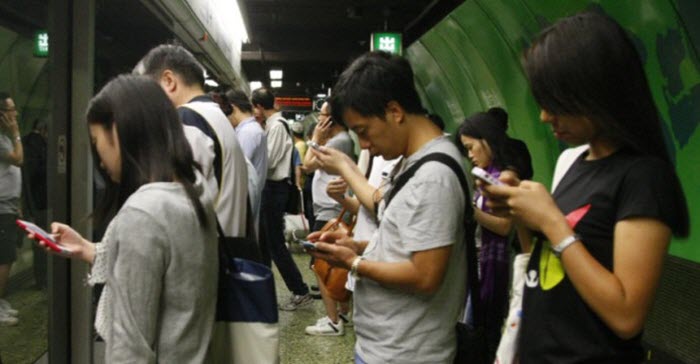
People on social media present themselves in real time (‘here’ and ‘now’), reacting to individuals and shaping how they are seen, especially because the world is very digital and interconnected as ever. These interactions are carefully thought about in regard to what they show online, while also being truthful in what’s being conveyed. Thus, this helps connections form with new people. However, it can be exhausting with the pressures to act a certain way and being different from who you are in real life. In ‘The Mediated Constructed of Reality’ (2017), Nick Couldry says that media is a space and platform where our identities are created. As Couldry and Hepp explain, “media of communication, and the ‘directness’ and ‘mediatedness’ of experience are inextricably interwoven with each other.” They also warn that technology is “now fundamental to the construction of everyday reality… but in ways that are producing new costs, tensions and pain.”

Young people, especially in recent generations, such as Gen Z and Gen Alpha, have grown up with their identity partly or mainly shaped in digital spaces, where they are exploring who they are and who they want to be in the future. Research by Soh, Talaifar and Harari shows that identity development is contextually embedded, meaning identity is shaped by digital media, and plays a bigger role than we realise.
To conclude, identity in the digital world is something we construct over time and is continuously moulded by our choices and our interactions with people online. Not only that, but it also enables us to explore our identity and who we are.
References:
Goffman, E. (1959). The Presentation of Self in Everyday Life. New York: Anchor Books.
Garfinkel, H. (1967). Studies in Ethnomethodology. Cambridge: Polity Press.
Couldry, N. and Hepp, A. (2017). The Mediated Construction of Reality. John Wiley & Sons.
Soh, S., Talaifar, S. and Harari, G.M. (2024). Identity development in the digital context. Social and Personality Psychology Compass, 18(2). doi:https://doi.org/10.1111/spc3.12940.


Hi! I really connect with the way you stated that individuals posting are presenting themselves in real time. It really points out the action of sharing a piece of yourself and your life to others. I think you rightfully pointed out how digital media plays a bigger role in identity formation than we even realize. This draws attention to the fact that the extent of the causes are still mostly unknown.