
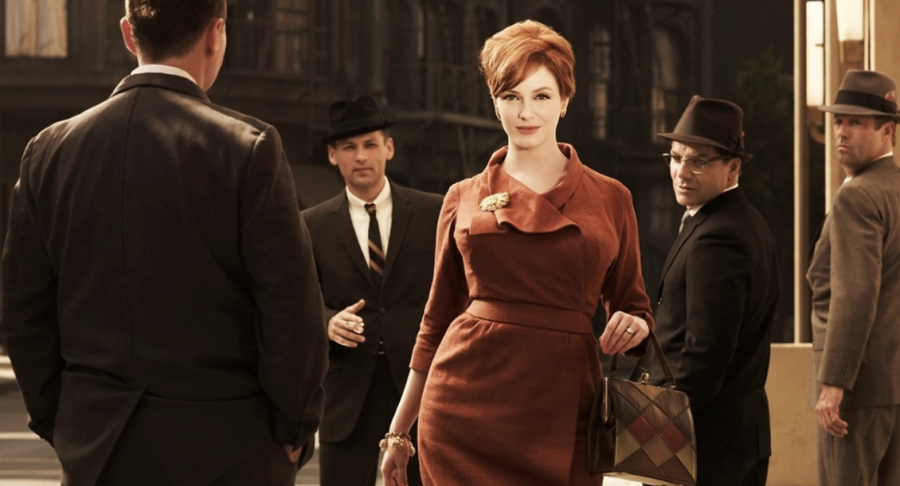
For centuries, women have been viewed as objects of sexual pleasure and treated as commodities, often disregarding their individuality and personal qualities. Unfortunately, the objectification of women in everyday life is not a new phenomenon. While women have made significant strides in asserting their rights and seeking equality, it is clear that there is still work to be done to achieve true progress.
Feminism
A brief overview of feminism begins in the 1800s with the campaigns for women’s suffrage, which continue to this day. During the 1950s to 1970s, radical feminism emerged as liberal feminism was not making significant changes, and women began to feel impatient. In the 1980s and 1990s, we saw the rise of the modest feminist movement. Women sought to simply be themselves without feeling the need to prove anything beyond their identity as women. The stigma around being perceived as “girly” diminished, and the recognition that femininity is just as valuable as masculinity became a crucial step forward for women to embrace their true selves without shame. However, this obviously came with its flaws, as women seem to be unable to catch a break. The idea of ‘girliness’ feeds into the patriarchy and pleases what Laura Mulvey coined as ‘Male Gaze’ in her 1975 essay “Visual Pleasure and Narrative Cinema”.
The Male Gaze
The term “male gaze” describes how visual arts and literature depict women from a masculine or heterosexual perspective. This concept arises from the tendency of the media to objectify women, presenting them as objects of male desire. In this portrayal, women are intended to be observed and consumed by men for their pleasure. It manifests in many forms, such as suggestive camera angles in movies, narratives that cater to men’s desires like ‘the perfect woman’ (e.g., a housewife), and an overall depiction of women as submissive and as damsels in distress. A prime example is Marilyn Monroe. Although we see her as a strong, independent woman, she was exploited for her looks.
It’s not only present on TV but also in our everyday lives, such as in advertisements. The following advertisement from the 1950s is a clear example of how women have been conditioned to believe that their only role is to be good enough for a man.
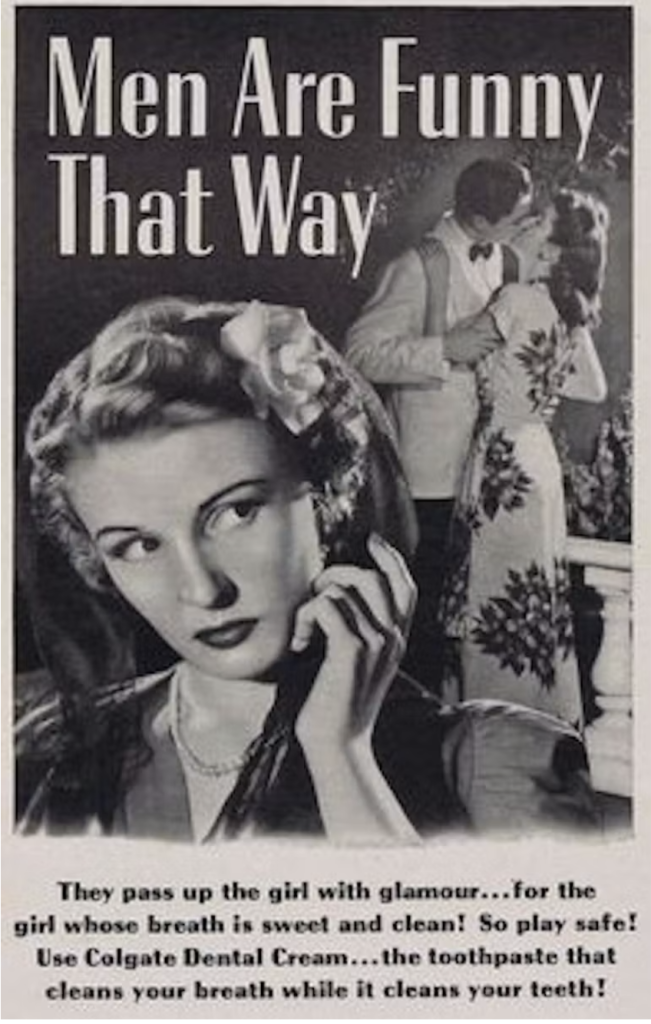
Something as simple as toothpaste has been curated into a product that creates a certain standard for women to satisfy men.
Personally, I don’t believe the advertising industry has fully moved beyond outdated tactics. A notable example is the American Eagle advertisement featuring Sydney Sweeney (2025). In this ad, she exploits her sexuality to persuade people to buy jeans. Sydney speaks in a soft, whispery tone that suggests submission while undeniably sexualizing herself. This approach implies that wearing the clothes will make women more attractive to men.

https://www.theguardian.com/fashion/2025/jul/31/fashion-statement-sydney-sweeney-american-eagle-ads-fashion-industry – More information on the controversy.
It is clear that women continue to be objectified for capital gain, which can be viewed as a regression in feminist movements, especially when women participate in this unhealthy narrative. I should clarify that many women are objectified without their involvement or even their awareness. However, this particular campaign stands out because it is evident that Sydney Sweeney is conscious of the message she is promoting: the male gaze.
References:
https://www.theguardian.com/fashion/2025/jul/31/fashion-statement-sydney-sweeney-american-eagle-ads-fashion-industry
Mulvey, L. (1975). Visual Pleasure and Narrative Cinema. London Afterall Books.


