

Have you ever wondered why two people can watch the same news report and come away with completely different ideas about what happened? It’s not because one is right and the other is wrong. The answer lies in two powerful ideas: encoding and decoding.
Think of it like a game of telephone, but with the whole world watching.
Step 1: Encoding – Building the News Story
First, let’s talk about how the news is made. An event happens—a protest, a new law, a market crash. But that raw event isn’t the story we see. Journalists and editors must turn it into a report. This process is encoding.
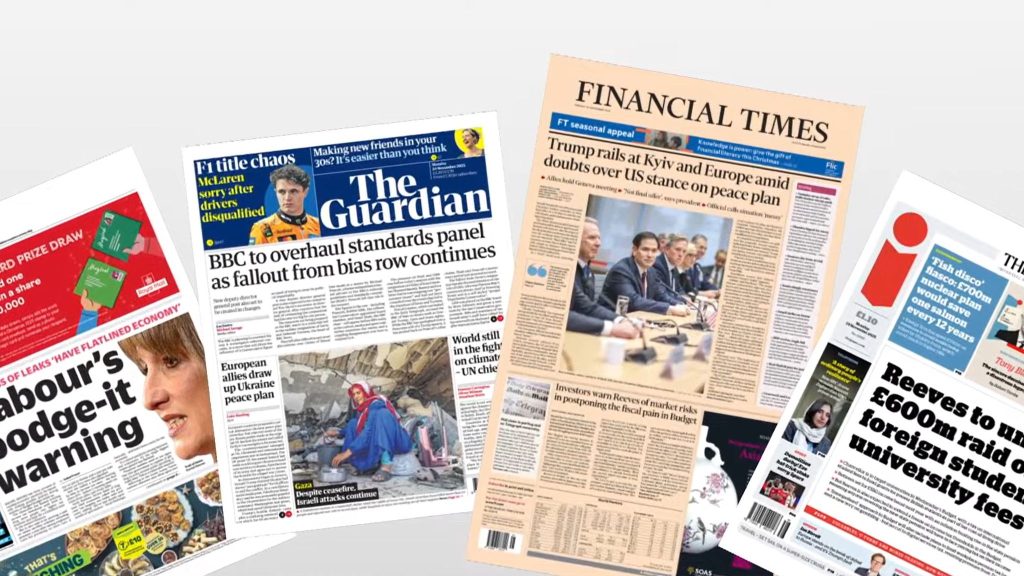
Encoding is all about choices. The newsroom is a kitchen, and the raw event is the ingredient. How they cook it up for you depends on their “recipe,” which involves:
- The Frame: Is the protest story about “people demanding their rights” or about “traffic chaos”? The chosen angle, or frame, shapes the entire story.
- The Words: Is a person a “freedom fighter” or a “rebel”? Word choice is never neutral; it packs an emotional punch.
- The Voices: Who gets to speak? A story with only police quotes will feel different from one with interviews from protesters.
- The Pictures: A calm wide shot of a crowd tells a different story than a close-up of a single angry face.
All these choices “encode” the news package with a preferred meaning—a way the producers hope you will understand it.

Step 2: Decoding – Interpreting the News Story
Now, the encoded news reaches you. This is where decoding happens. You are not an empty bucket waiting to be filled with facts. You are an active interpreter. Your life experiences, your beliefs, and your background all act as a filter.
Researchers found we generally interpret news in one of three ways:
- The Agreeable Viewer: You accept the message just as it was sent. If the report says the tax increase is “necessary,” you think, “That makes sense. It’s for the best.” You see the story the way the newsmakers intended.
- The “Yes, But” Viewer: This is where most of us are. You understand the general point but adapt it to your own life. You might think, “Okay, I see why the tax is needed for the country, but it’s really going to hurt my wallet. Why aren’t they taxing the rich more?” You accept the frame but argue with parts of it.
- The Skeptical Viewer: You see the news frame as biased and reject it entirely. Your reaction might be, “This is just government propaganda! They’re helping corporations and lying to us.” You read the story in a completely opposite way.
Why This Matters to You
Understanding encoding and decoding makes you a smarter news consumer. The next time you watch a report, don’t just ask, “Is this true?” Ask:
- “How was this story built?” (What frame and words are they using?)
- “How am I reading it?” (Are my own views shaping my interpretation?)
The news is not a perfect mirror of reality. It’s a crafted message, and you have the power to decide how to interpret it. By knowing the game of encoding and decoding, you take control of the conversation.


Your article flows smoothly, and the concepts are explained clearly enough, but it still reads like an introductory lecture trying to “enlighten” everyone. The good thing about this article is that it explains the theory of encoding and decoding in a much more human way than a textbook, but the bad thing is that you can clearly feel the author’s hope that all readers will have a sudden epiphany: “So the news I watch every day has been carefully seasoned!” Your article is like reminding people not to treat television as a truth generator anymore.
When explaining “encoding,” your analogy of a newsroom to a kitchen is arguably its most successful part. The framework, word choice, sound sources, and image selection are all broken down and presented, preventing readers from continuing to fantasize that news is some kind of pure water. Your descriptions of these mechanisms are straightforward but not crude, allowing beginners to easily understand why news is never just “facts themselves.” This is indeed commendable.
The real highlight is that the article attempts to make us realize that news is not reality, but a “construction.” This viewpoint is indeed worth reflecting on for those who have long treated news as gospel. The article encourages readers to ask “How was the story constructed?” and “How am I reading it?” This critical reading attitude is more valuable than any of the metaphors in the article. Overall, this is a popular science article aimed at a broad audience.
This is a really insightful post! I love how you broke down the process of encoding and decoding in the news, making it clear that the way a story is framed can drastically affect how we perceive it. The examples you provided, like the choice of words and visuals, really highlight the power that media has in shaping public opinion. One suggestion for further exploration could be to dive a bit deeper into the idea of media literacy. It might be interesting to discuss how viewers can become more aware of the frames being used and actively seek out diverse perspectives to challenge their own biases. This could further empower audiences to decode news more critically. Overall, great job in explaining these concepts in such a relatable way.