

In 1975 a British film theorist, Laura Mulvey published an essay called “Visual Pleasure and Narrative Cinema”. The piece criticized traditional Hollywood cinema and the way females were portrayed on screen through a masculine and specifically heterosexual lens (McCann, 2025). She suggested that women were thus being undressed of relevance and made into passive figures who existed solely for male visual pleasure (Mulvey, 1975). This hidden patriarchy is woven into Hollywood and mainstream cinema which leads to the male and female internalising power dynamics and practising self-objectification (Mulvey, 1975). What Mulvey thought to be a theory that would pass with time and become ancient archaeology, remains relevant to the contemporary media industry.
As a young girl growing up in a Ukrainian household, I would watch a lot of Russian tv. Every ad I saw, I recall being mesmerised by the way the women were portrayed and how they acted. They were beautiful, long-legged women with voluminous hair and white teeth; perfectly pictured. One thing these narratives had in common was the portrayal of a woman who was desirable and a male capable of rescuing her. As I matured, I realised how much this image had subconsciously affected my view on femininity and masculinity.
Even though nowadays Russian advertising shows women from a more sexualised and objectified stance, this has not always been the case. This occurred as a post-Soviet phenomenon strongly affected by the West where advertising is heavily based on gender stereotypes. The image of a Soviet woman was quite different – she was strong, active and self-sufficient, either a workwoman or a mother (Kalacheva, 2002). This view of women was heavily controlled by the State, induced with Soviet ideology. In the 1990s the view of a female on screen started shifting from the image of a mother to a younger feminine body (Kalacheva, 2002). Even though this felt like a certain step into freedom for the image of a woman on screen, another problem was awaiting ahead.
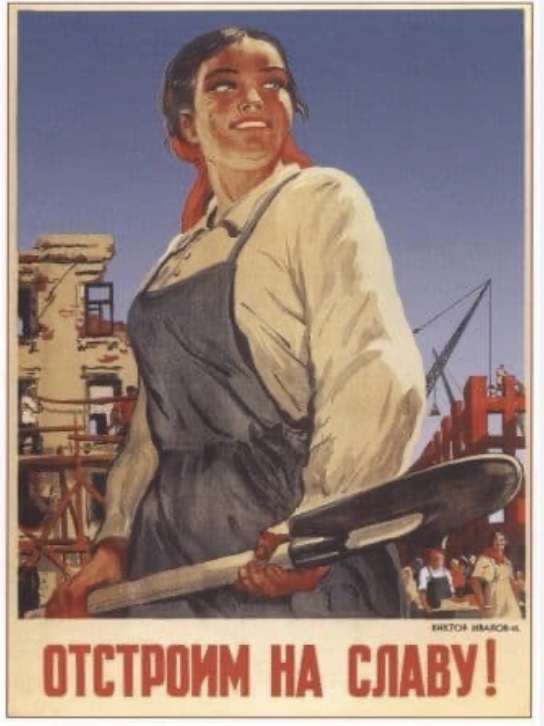
A Soviet woman encouraged to work in 1945 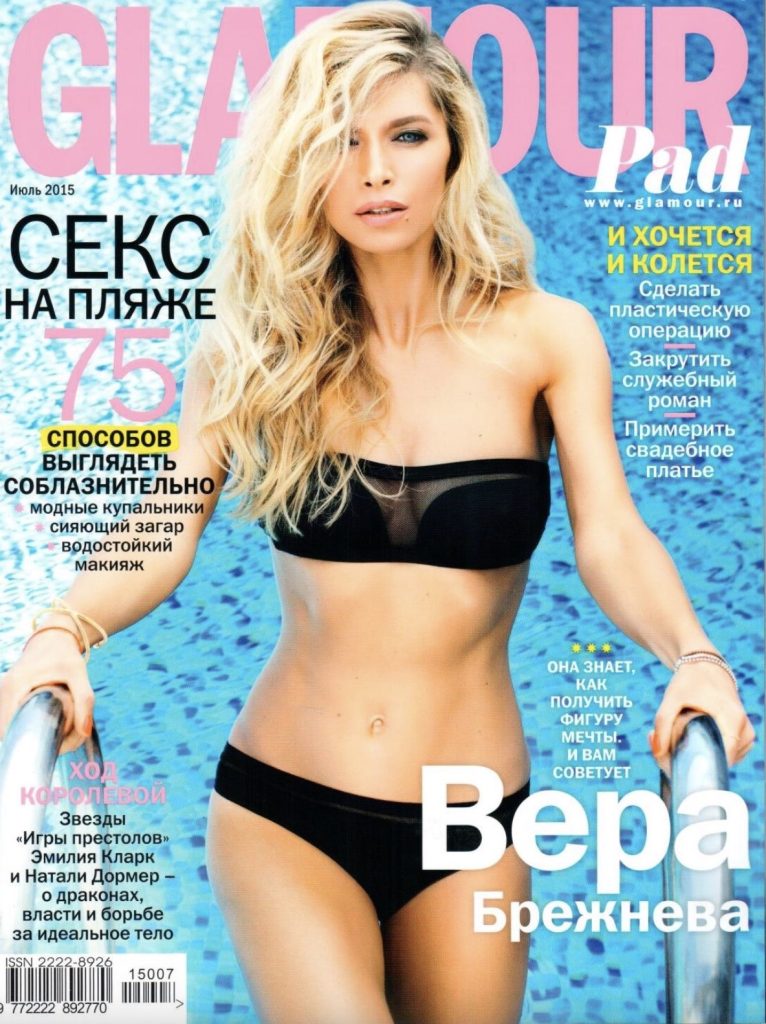
A modern woman told “75 ways how to be seductive” in 2015
As you can tell, Laura Mulvey’s theory of the Male Gaze is fully applicable to the modern advertising industry.
Women are often depicted as passive objects; their physical appearance being used as a means of promotion (Damayanti, 2024). Poses such as a woman touching herself sensually or nudity, feed the societal narrative that a female body is to be gazed upon. Reflecting on Mulvey’s theory, I now understand Russian advertising more promptly and can recognise lenses I have subconsciously started wearing when thinking of gender stereotypes.
References
Kalacheva O. (2002). A Western Body for the Russian Woman: Shaping Gender Identity in Modern Women’s Magazines. 20(1), pp. 75-78. [Accessed 29 November 2025].
Mccan B. (2025). Half a century of the ‘male gaze’: why Laura Mulvey’s pioneering theory still resonates today. [Online]. The Conversation. Last Updated: 30 September 2025. Available at: https://doi.org/10.64628/AA.hhuqyuxdq [Accessed 28 November 2025].
Mulvey L. (1975). Screen. Visual Pleasure and Narrative Cinema. 16(3), pp. 6-18. [Accessed 28 November 2025].
The British Academy. (2024). Freud, Hollywood and the male gaze. [Online]. Available at: Freud, Hollywood and the male gaze[Accessed 29 November 2025].


Hi Sanna, it was very interesting to read about the male gaze from the perspective of a “perfect Russian woman”. As a person from a quite similar background to yours, I also grew up with the idea of being ideal, skinny, long-legged, and always maintaining a polished appearance. When you are a teenager, you don’t really understand how these ads could affect you; however, over time, you realize that such a huge number of girls with anorexia in your circle do not appear out of nowhere. Pop culture that produces this insane amount of films, ads, music, etc, is always presenting a perfect image of a woman that you probably would never be able to reach, and this, in turn, affects girls with fragile psyches who, in an attempt to perfect oneself, ruin their health. It is really crucial that society, nowadays, pushes narratives such as “inclusivity” and “body positivity”, and it is really important to realize that the “ideal woman” is a product of patriarchy, and move further from such a disruptive gaze.
Hiya Sanna, this is a very engaging read, especially your point about subconciously being impacted by the media, it highlights the importance of representation in the media as I think we all become impacted by the types of depictions we see of women growing up. I also really liked your examples demonstrating the differnce between the way women were represented then and now; 1945 being a hopeful prospect to then lead to modern day were women are being sexualised. Thank you for sharing, it’s really enlightening to see perspectives I wouldn’t have considered.
I think it’s interesting how you took your own lived experience and culture and applied that to the topic. I think its really sad how it was changed by western media and a western perspective of the male gaze but it’s also interesting how across multiple cultures a woman’s perceived role stays practically the same which can also probably be attributed to the west. I can also relate to seeing the woman needing to be saved archetype in media but instead I watched a lot of cartoons and it even appeared there constantly like penny in the amazing world of gumball.
Hi, I really agree with your point about the “subconscious impact.” The most alarming part isn’t how advertisements gaze at women, but how women eventually learn to gaze at themselves in the same way. This is exactly what Mulvey describes as the “internalized male gaze. I think that in today’s social media era, this gaze has become more subtle and powerful.