
Advertisements are created with specific messages in mind, but audiences do not always interpret them as intended. The same advertisement can communicate different meanings to different people, depending on their experiences and perspectives. This raises an important question about how meaning is created and understood in media communication.
Hall’s (1973) Encoding and Decoding Model explains that media communication involves two main processes. Encoding refers to how producers create messages using signs and symbols, while decoding describes how audiences interpret these messages. Hall suggests that audiences do not always understand or accept the intended meaning. He identifies three main decoding positions, dominant, negotiated and oppositional readings. These explain how audiences may accept, partly accept or challenge the meaning of a media message.
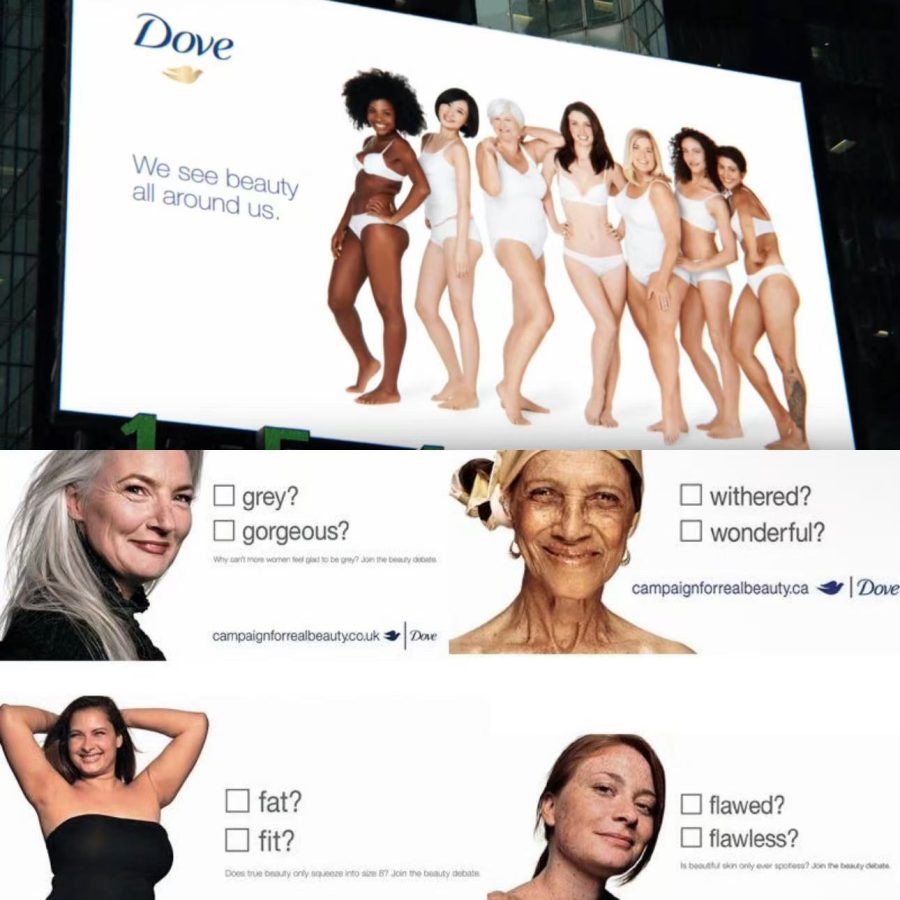
Dove launched its Campaign for Real Beauty in 2004 to challenge traditional ideas of beauty. The advertisements feature women of different ages, skin colours and body types, accompanied by the slogan “We see beauty all around us”. Other advertisements use questions such as “Grey or Gorgeous?”, “Fat or Fit?” and “Flawed or Flawless?” to encourage audiences to question common labels about women’s appearances. Through these images and words, Dove aims to present beauty as diverse rather than limited to traditional standards. However, the use of these contrasting labels may also influence how audiences understand the campaign’s message.
From a dominant reading, audiences may accept Dove’s intended message that beauty comes in different forms. They may view the campaign as a positive challenge to traditional beauty standards and support its message of self-confidence.
However, some audiences may have a negotiated reading. They may agree that beauty should be more inclusive, but also recognise that Dove is a commercial brand promoting its products. Therefore, they may support the campaign’s message while remaining aware of its commercial purpose.
An oppositional reading may occur when audiences understand Dove’s message but question its intentions. For example, they may believe that the campaign uses female empowerment to attract attention and improve the brand’s image. From this perspective, the campaign may be seen as a marketing strategy rather than simply an effort to promote social change.
Overall, Dove’s Campaign for Real Beauty demonstrates that the meaning of an advertisement is not always the same as what a brand intends to communicate. Although the campaign promotes a more inclusive understanding of beauty, its commercial interests may lead audiences to question its message. This highlights the importance of audience interpretation in shaping the meaning of media messages.
Reference List:
Hall, S. (1973) Encoding and Decoding in the Television Discourse. Birmingham: Centre for Contemporary Cultural Studies, University of Birmingham.


