

Monday, 19th October 2026, Katja Pelicaric
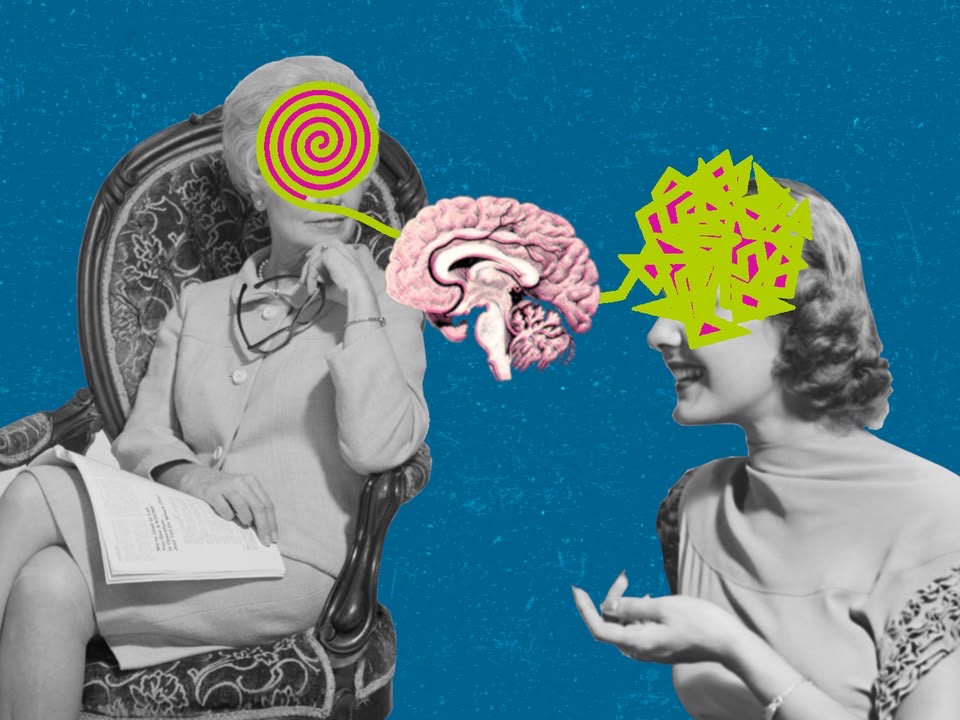
This week I bought a dress on TikTok Shop without ever seeing an ad for it. Instead, a creator I follow modelled and reviewed it, and based on her opinion it was straight in my basket and arrived the next day. I had made a purchase based on one person’s opinion, not a brand’s marketing campaign. This is the Two-Step Flow theory in action. Lazarsfeld, Berelson and Gaudet (1944) argued that media messages reach opinion leaders first, who then pass them on, along with their own interpretation, to others. To test this, I traced the origins of three recent interests. Firstly, Big Brother: I hadn’t watched the first week, but I already understood the storyline because a friend reposted a TikTok creator who recapped the episodes, complete with opinions on individual housemates, which lead to divided discourse in the comments. Secondly, I bought the dress after influencer @macimccarley posted a video wearing it, captioned “the most stunning dress I’ve ever worn”, rather than seeing an ad from the company making the dress. Finally, I learned about the under-16 social media ban through @kimberleyonline’s video explaining it and urging young people to ‘back up their accounts’.
All three examples show the two-step flow. In each case, step one was the creator engaging with the original content, and step two was me receiving their interpretation rather than the source itself. I trusted them and was more easily influenced because I’ve followed these creators for a while, so we’ve built a digital rapport. They feel more like a friend who wants me to spend my money or time on something valuable, rather than soulless companies pushing products for profit. Katz and Lazarsfeld (1955) found that opinion leaders are topic-specific, which matches my experience: the creator I trust for fashion has no influence over how I understand the news.
The theory does have limitations. I started watching Big Brother because of a friend’s repost, which is closer to a multi-step flow than two steps. Algorithms also complicate things, as TikTok decides which creators reach my feed before I choose to trust them. Finally, opinion leaders aren’t neutral. The creator who promoted the dress may earn commission, which makes influencers seem like companies taking advantage of trust for profit, and I couldn’t check whether the explanation of the ban was complete. Unlike journalists, creators face little accountability for what they leave out.
Overall, the two-step flow still helps explain why a trusted person’s opinion can matter more than the original source. However, it needs updating for a media environment shaped by algorithms, reposting and commercial incentives. Tracing my own habits showed me how rarely I check the original source myself, which makes me wonder how much of what I believe is really my own interpretation.
References
Katz, E. (1957). The two-step flow of communication: An up-to-date report on an hypothesis. Public Opinion Quarterly, 21(1), 61–78. https://doi.org/10.1086/266687
Lazarsfeld, P. F., & Berelson, B. (1948). The People’s Choice. New York, Columbia U. P.


