
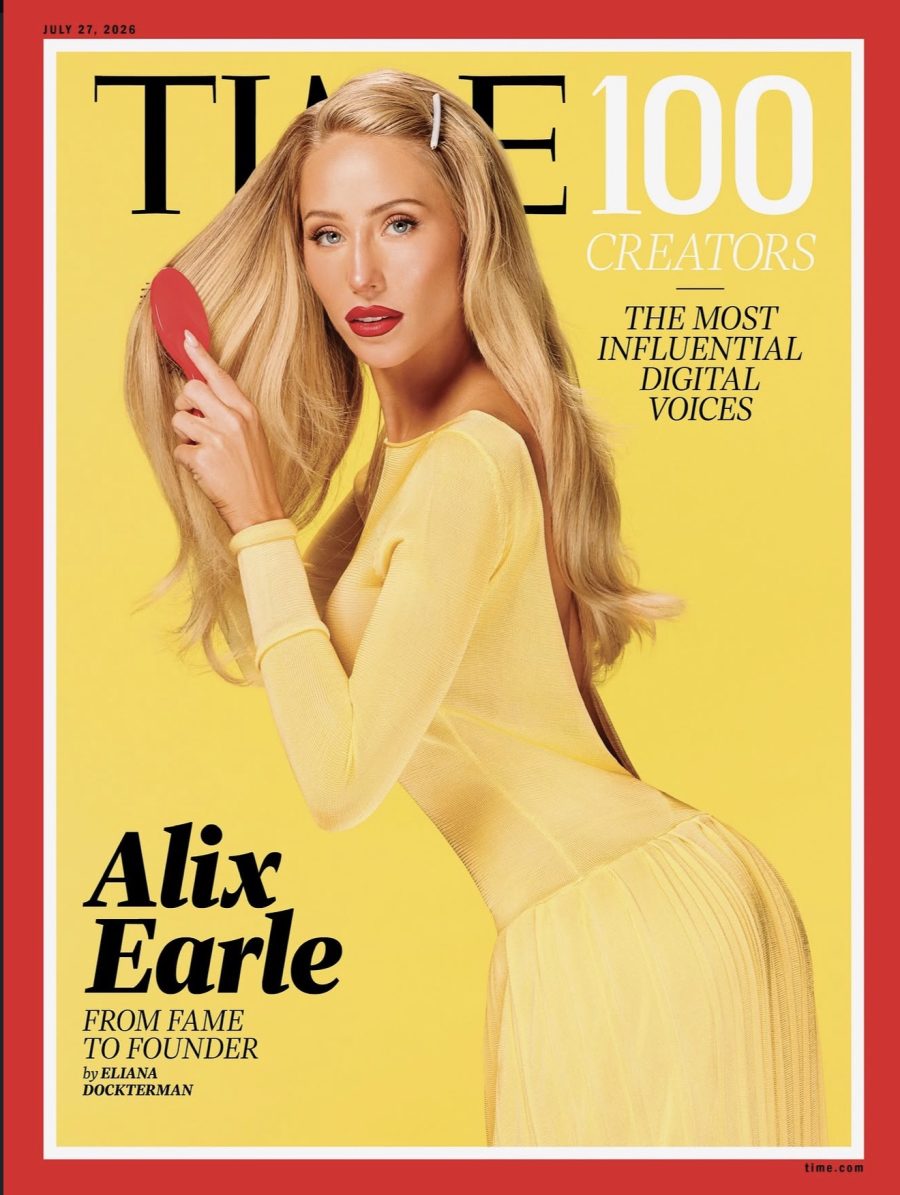
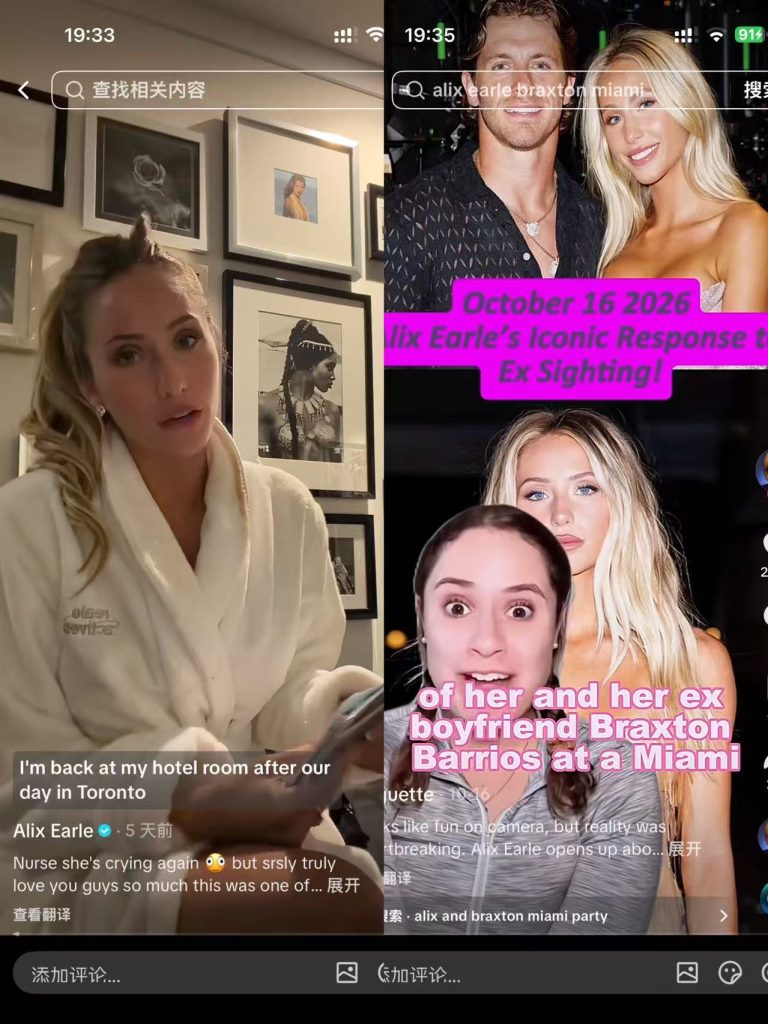
Vulnerability has become a powerful aesthetic on TikTok. Alix Earle rose to fame through her casual GRWM and un-GRWM clips, where she openly talks about heartbreak, anxiety and messy personal struggles. In these make-up and make-up removal videos, she weaves intimate stories into her routine: discussing her breast augmentation decision, dating an NFL player, and the upheaval caused by her father’s infidelity. This confessional style makes audiences feel like they are listening to a close friend. She was listed in Time Magazine’s 2026 list of the top 100 digital creators, recognised for building a media operation that traditional outlets would take decades to develop. At first glance, these videos feel unscripted and raw. Yet, when we pair her TikTok content with her new Netflix reality series Earle Meets World, the line between genuine private feeling and performed identity starts to blur. Drawing on Haziq’s discussion of the curated digital self, alongside Couldry and Hepp’s idea of mediated reality, this post explores how vulnerability is staged across two different media spaces. What we see as “real” is always shaped by the platforms that frame it.
It is easy to interpret her tearful, confessional videos as spontaneous outpourings. However, as Haziq argues in Putting the best digital self forward in the age of Social Media, self-presentation on social media is rarely accidental. Every story she chooses to share, every emotion she decides to show, forms part of a deliberate strategy to craft a likeable, relatable digital self. Being open about heartbreak or low moments becomes her way of building trust with followers, rather than simply an unplanned vent.
This idea fits neatly with Goffman’s theory of front and backstage behaviour. Traditionally, private grief, relationship conflict and personal insecurity belong to the backstage, moments we would normally keep hidden from public view. Alix moves these intimate, vulnerable experiences onto the front stage of TikTok. She performs the role of the honest, imperfect friend for her audience. Crucially, this does not mean her feelings are fake, but that she selects, frames and packages them for public consumption.

Many viewers hoped her Netflix show Earle Meets World would pull back this curtain. The series is marketed as a chance to see life behind her TikTok persona, capturing family tensions, industry pressure and the strain that fame places on her relationships. Audiences expect the reality show to be the “true backstage”. Still, Couldry and Hepp’s theory of the mediated construction of reality reminds us that Netflix is also a media platform. The show has its own producers, editing choices and narrative structure. It does not capture unfiltered reality; it constructs another version of it for viewers.
Taken together, Alix’s TikTok clips and her Netflix series show how boundaries between front stage and backstage have become messy in contemporary digital culture. As Time points out, creators like Alix operate like independent media companies, carefully managing every part of their public image. TikTok and Netflix each create their own version of who she is. Platforms do not just host her content — they shape what counts as authenticity for influencers today. We are left wondering: when vulnerability becomes such a successful performance, can we ever easily separate genuine feeling from the digital self creators choose to show us?
reference
Goffman, E. (1959). The Presentation of Self in Everyday Life. Garden City: Doubleday. Available at: https://monoskop.org/images/1/19/Goffman_Erving_The_Presentation_of_Self_in_Everyday_Life.pdf (Accessed: 01 November 2026).
Haziq, S. (2019). ‘Putting the best digital self forward in the age of Social Media’.
Couldry, N. and Hepp, A. (2017). The Mediated Construction of Reality. Cambridge: Polity Press. Available at: https://www.andreas-hepp.name/en/books/mediated-construction-of-reality/ (Accessed: 01 November 2026).
Earle Meets World. (2026). [Television series].
Netflix. Available at: https://www.netflix.com/title/ (Accessed: 01 November 2026).


