
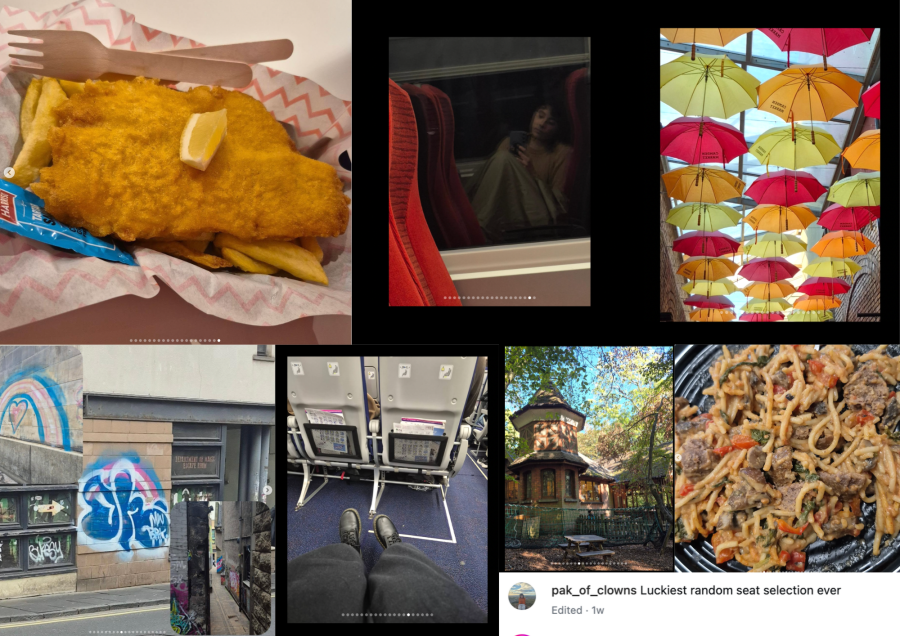
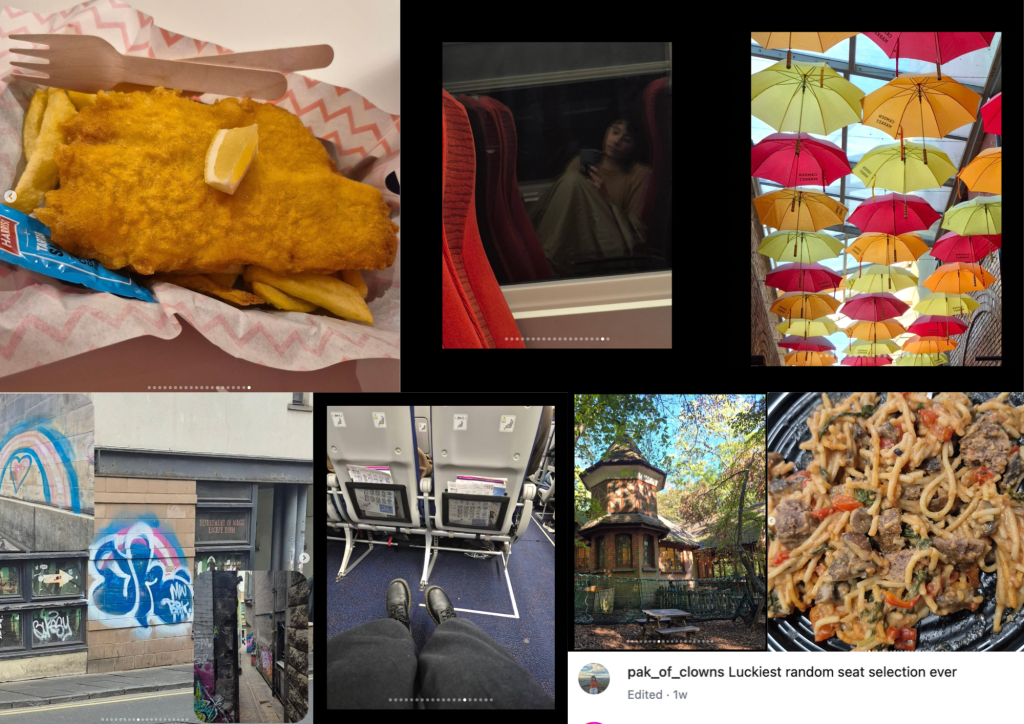
When thinking about what to write on for “Construction of Identity in a Digital World”, the first thing to come to mind was my own Instagram page. I posted regularly before coming to the UK for my study abroad program, but have posted weekly since. It is primarily to have an organized series of highlights to look back on when the semester ends, but also to share these little pieces of my life with my friends. To be frank, though, these posts only show the shallowest parts of my trip. Every photo I chose for the collage above has a deeper meaning to me. Each photo of the trans flags was taken quickly with the fear of not knowing how the person I was with would react. The airplane photo was after nineteen hours in an airport and two missed flights, but you would never know that based on the caption (to the right of the photo). Finally, in all of the photos, there is a representation of longing for my friends at home and the ever present loneliness I have felt here. I have intentionally curated this character of someone who is thriving, exploring a new country and having an all around great time.
I do not share all of that to gain sympathy, but to show that we subconsciously share only the good parts of our lives, constructing a person who is too perfect to be real. Erving Goffman believed that humans essentially lived in various masks, playing different characters depending on who we are around and how we want to appear (Goffman, 1959: 18). When I think of my own social media I recognize the metaphorical masks I wear on each page. My Facebook page is vastly different from Instagram because family sees it. My close friends on my Instagram is a completely different—and far more authentic—version of myself while my general story and posts are cleaned up. I still make brash jokes, but they are significantly more appropriate.
The Mediated Construction of Reality Couldry and Hepp write, “We use the term ‘materialization’ in a comprehensive sense, referring here both to the material presence of each medium and at the same time the norms and beliefs about ‘how things are’ in relation to this medium, including the habits we develop with regard to and around this medium” (p.46, 2016). Often without knowing we do it, we develop different habits for different forms of media. We write essays differently than we text, we text differently than we speak. Similarly, we may post one way on TikTok and another on Instagram. This is normal, but something worth considering, especially if you are the type of person who considers themself authentically true to themself always.
The construction of identity on social media is a varied and nuanced concept. How deeply it runs and impacts a person is completely dependent on the individual. Despite this, it does affect everyone, even people who are not active on social media.
References:
Couldry, Nick, and Andreas Hepp. (2016) The Mediated Construction of Reality.
Haziq, S. (2019) Putting the best digital self forward in the age of social media.


