
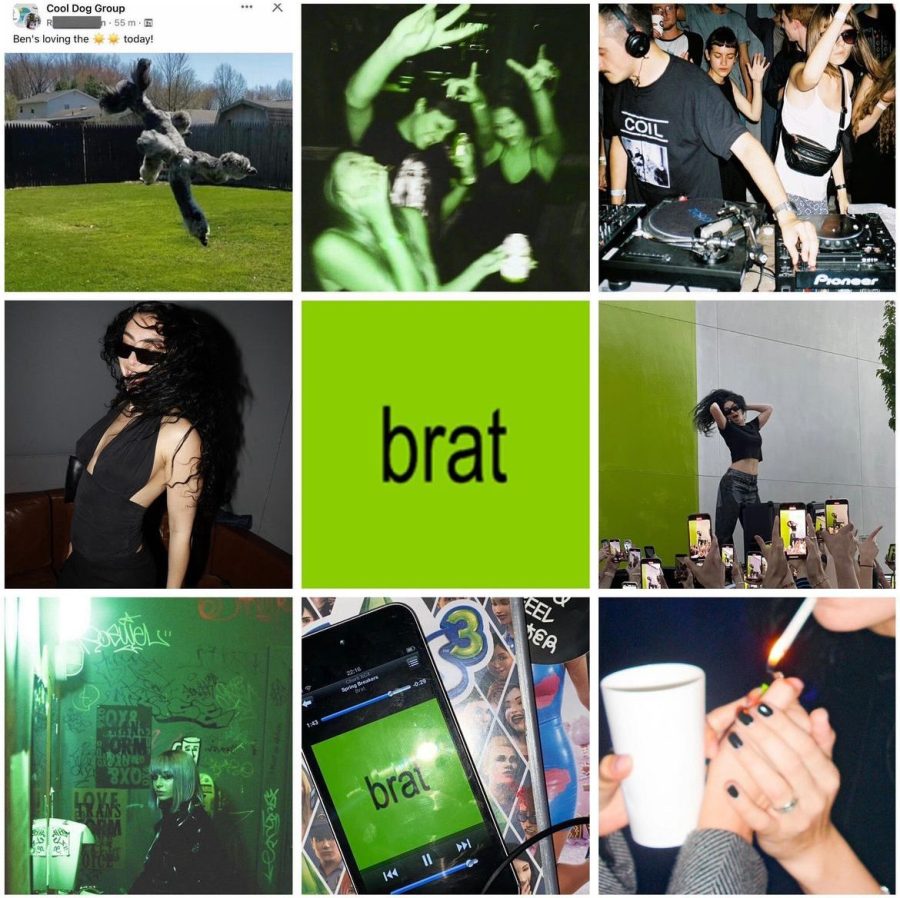
Social media has changed how celebrities make and present their identities. Platforms like Instagram and TikTok allow artists to display themselves to large audiences, but at the same time, they also enable users to contribute to their public image. Charli XCX’s 2024 album named Brat is an interesting example of this. What was born as a music release rapidly became a larger cultural phenomenon, dubbed “Brat Summer.” With memes, trends, and its signature lime-green aesthetic, Brat went beyond being just an album and became a recognisable digital identity that audiences could replicate and adopt for themselves.
A good way to understand this phenomenon is Erving Goffman’s (1959) theory of dramaturgy. According to Goffman, people present different sides of themselves to different audiences. Linking social interactions to performances in a theater. Charli XCX’s online persona can be related to his idea of the front stage and impression management. Through her music, posts, visual identity, and interviews, she communicates a certain public persona with confidence and imperfection. Brat’s aesthetic, including the eye-catching green album cover, was intentionally crafted to establish a distinctive identity. Nonetheless, unlike a traditional celebrity image, this example was not controlled exclusively by the artist herself. Her audience was also involved in shaping what Brat represented.
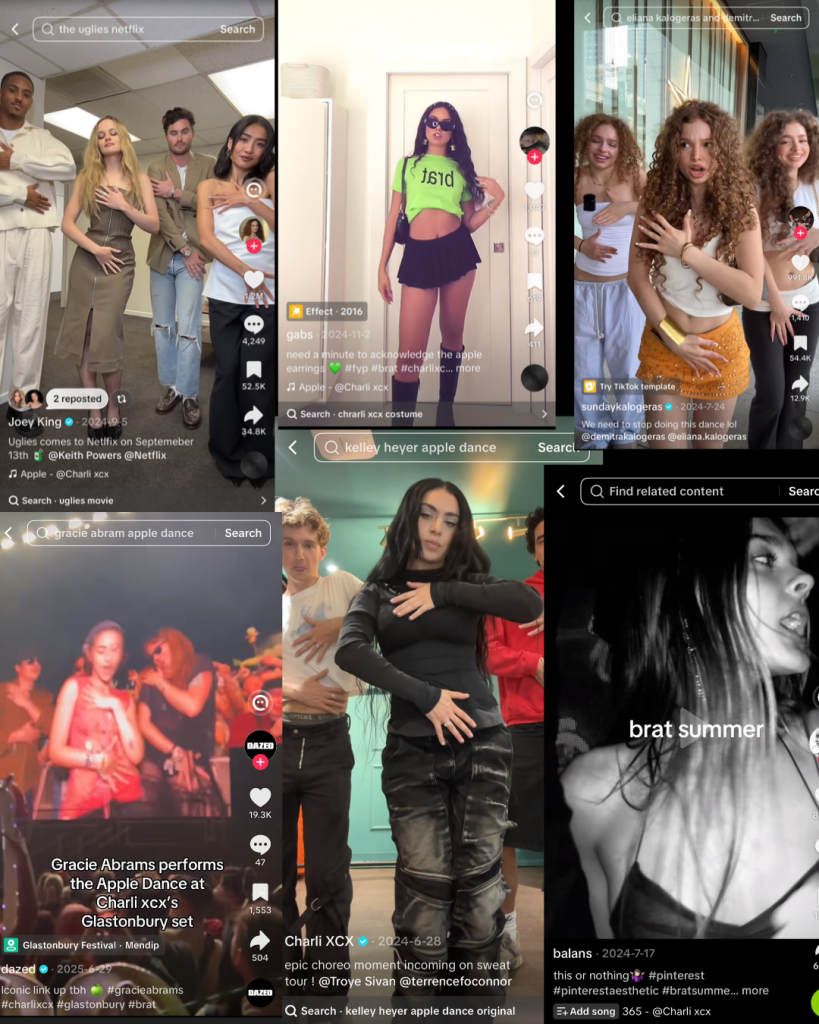
Another perspective highly related to this phenomenon is Harold Garfinkel’s (1967) ethnomethodology. Garfinkel explores how people create and maintain social order through everyday interaction and shared social understandings. This can therefore help explain the evolution of Brat’s meaning within online communities. Social media users recreated the album cover and participated in trends and memes, using the word “brat” to describe lifestyles and attitudes. These interactions were crucial to developing a shared understanding of what the word and the phenomenon were meant to be. So, the identity in this case was not just delivered by Charli XCX herself but was continuously interpreted, debated, and recreated by large audiences. This demonstrates how digital identities can emerge through collective participation and shared cultural meanings.
The concept of the Society of the Spectacle by Guy Debord (1967) offers an important additional perspective. He argues that modern society experiences reality through visual representations. Brat’s example fits perfectly, thanks to the fact that the green aesthetic became as recognisable as her music. TikTok, with its memes and fashion, helped the album develop a proper identity that fans could adapt and reinterpret for themselves. Now an important question arises: did Brat represent individuality, or did it become another commercialised image?
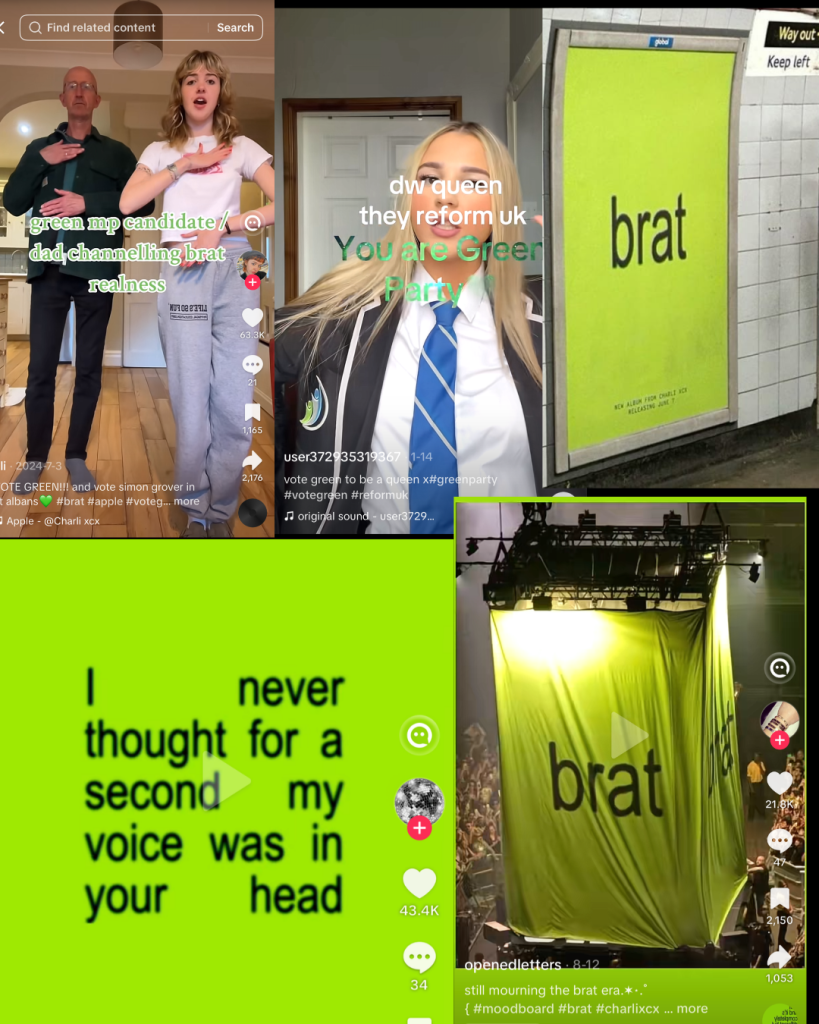
The “Brat” influence expanded even beyond social media and music, with the UK Green Party adapting an inspired aesthetic during the 2024 general election campaign. Illustrating how the trend became a global and wider cultural phenomenon.
Its influence even extended beyond music, with the UK Green Party adopting a Brat-inspired aesthetic during the 2024 general election campaign, demonstrating how the trend had become a broader cultural phenomenon.
Lastly, Charli XCX’s Brat shows how the advent of social media allows both celebrities and their audiences to shape their digital and social identities. With Goffman, Garfinkel, and Debord’s theories, we can understand how our own identities are shaped and presented online. Illustrating how social media nowadays is not just a place where we express ourselves, but it’s also a space where we are influenced by others.


