
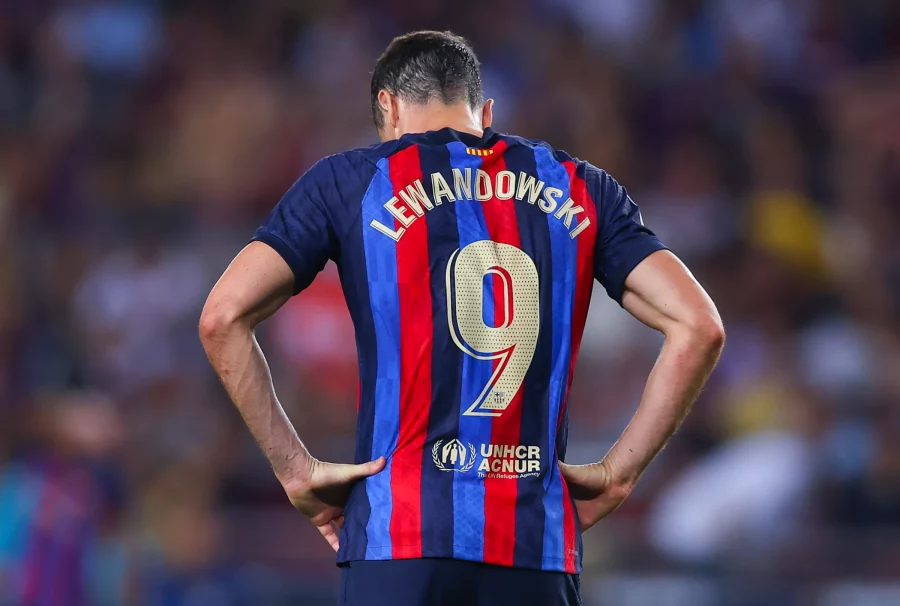
As someone who grew up in a Polish household I always admired Robert Lewandowski and would look up to his achievements reminding myself that with hard work and dedication anything is possible.
Social Media is an excellent tool for portraying oneself to the main world. It enables us to control how others perceive us through posts, stories and the content we engage with, for instance Instagram Reels. It allows individuals to portray themselves in a desired way, letting people gain a further insight into our lives. Marwick and Boyd (2011) explain that users consider the imagined audience when deciding what to share, reinforcing on the idea of how online identities can be carefully portrayed on social media.
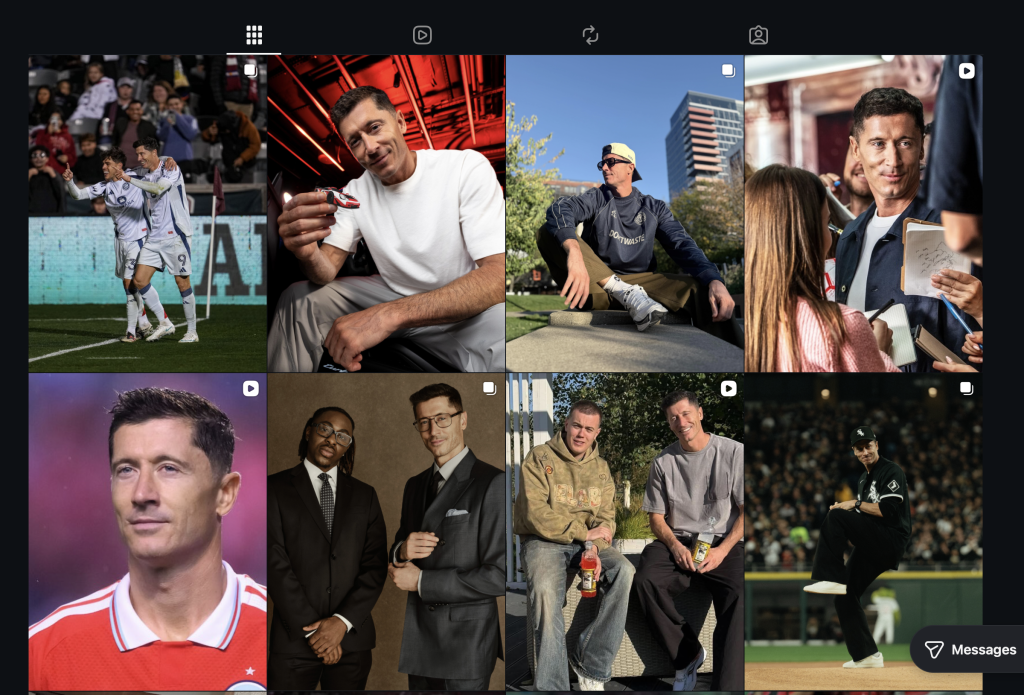
Robert Lewandowski posses an instagram account with over 38.7 million followers, his content consist of three main things. Football, social life and sponsorships I will explore these aspects through his posts and what this tells us about his Online Identity.
He portrays himself as a professional athlete through posts showcasing his achivements. His recent football post show him playing for Chicago Fire alongside teammates celebrating victories. His facial expressions and body language suggest that Robert is happy at this new club and has adjusted well to the team. Smith and Sanderson (2015) explore how professional athletes use Instagram Photos and captions to present themselves. This reinforces how Lewandowski uses match related content to maintain his identity as a footballer.
Other recent posts on his social media page showcase his family and their lifestyle in Chicago. The slideshow includes Roberts Wife and their two daughters spending time together, it also includes shots of Chicago city following his recent move from Barcelona.These posts could portray a celebrity like lifestyle, whereas family photos show a more relatable and personal side. However, these moments do not necessarily show aspects of his everyday private life.
On the other hand, Robert Lewandowski’s social media page also includes some sponsorships particularly his most recent hot wheels partnership. He is holding his own hot wheel car in his hand with the caption: “you’ve seen me collect goals, now can you collect this?” this could be Robert’s way of encouraging his fanbase to purchase the new product. The car is white and red which resembles the Poland flag therefore the post could connect his sponsorship with his Polish identity. Kucharska et al (2018), in their study specially about Lewandowski, explored the footballers authenticity on social media. This is relevant because his posts combine all sporting achievements, personal life and commercial partnerships to create a public image.
Overall, Lewandowski’s Instagram social media page showcases how a person can present different sides of their identity online. His football related posts highlight his success, his family related posts show a personal side, and sponsorship develop his commercial image. Despite the posts being carefully selected to be shared with a large audience it demonstrates how personal identity can be both carefully and personally constructed through the use of social media platforms.
References:
Kucharska, W., Brunetti, F., Confente, I. and Mladenović, D., 2018. Celebrities’ personal brand authenticity in social media: an application in the context of football top-players. The Robert Lewandowski case. Academic Conferences and Publishing international Limited ACPI.
Marwick, A.E. and Boyd, D., 2011. I tweet honestly, I tweet passionately: Twitter users, context collapse, and the imagined audience. New media & society, 13(1), pp.114-133.
Smith, L.R. and Sanderson, J., 2015. I’m going to Instagram it! An analysis of athlete self-presentation on Instagram. Journal of broadcasting & electronic media, 59(2), pp.342-358.


