
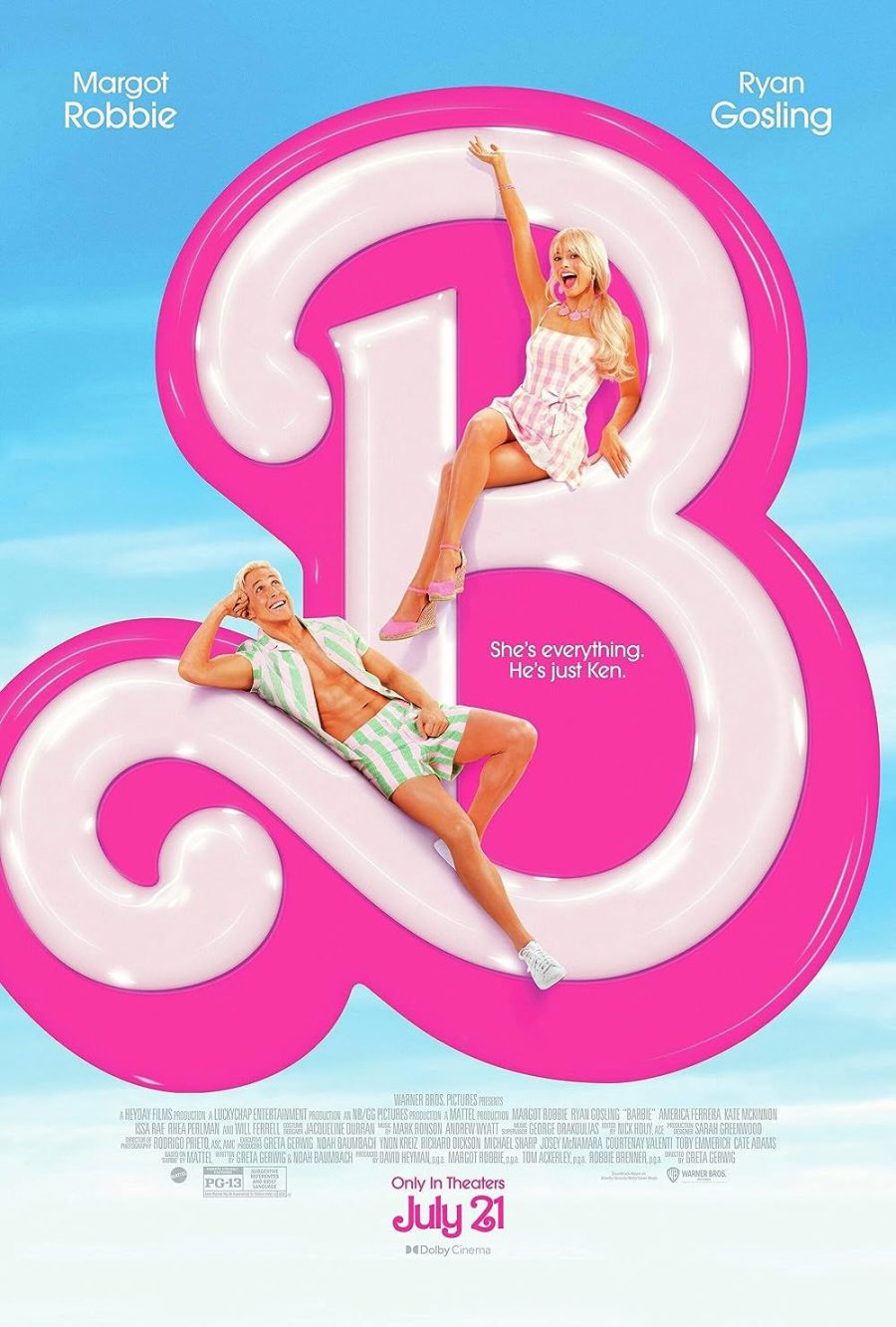
Released in the summer of 2023 and directed by Greta Gerwig, Barbie became more than a traditional movie. Through its humour, pink aesthetic, and discussions about gender inequality, it created a worldwide conversation about feminism. However, the film also raises an interesting question: Is Barbie genuinely promoting feminist values, or is it using feminism as a marketing strategy?
Hall’s Encoding and Decoding theory (1980) helps us understand how different audiences interpret the film’s message. He argues that every sort of media producer encodes messages with preferred meanings, which audiences therefore decode according to their own beliefs and experiences. Within his theory, he identifies three possible audience positions: dominant, negotiated, and oppositional readings. In the movie Barbie, the central message is about female empowerment. Through Barbie’s journey from the “perfect Barbie world” into the real world, it questions the limitations women experience within patriarchal society. Different audiences can interpret this message in different ways.
A dominant perspective can be seen when viewers recognise the film’s intended message. Some audiences may see Barbie as an empowering portrayal of women who can be ambitious without being limited by traditional gender roles. On the other hand, negotiated reading takes place when audiences partly agree with the message but at the same time question certain aspects. For example, they might understand the film’s criticism of sexism meanwhile recoginse that the message is being promoted through a highly commercial product owned by Mattel. Finally, an oppositional reading fully rejects the meaning. Critics may argue that what’s been presented is a limited version of feminism due to the fact that it doesn’t fully address every aspect of it, such as class, race, and different social experiences.
Morley’s (1980) Nationwide research illustrated how audiences do not always interpret media messages in the same way, as their cultural and social backgrounds play a crucial role in their understanding. This significantly connects to Barbie because platforms such as Instagram and TikTok allowed audiences to participate in the film’s cultural impact. During summer 2023, memes and pink outfits helped audiences to create their own meaning, going beyond the original movie message. Audiences could reinterpret and criticise the film’s feminist message by sharing their own opinions on the internet. This demonstrates how we are active participants in media communication rather than simply passive receivers.
In conclusion, Barbie illustrates how media messages do not have only one fixed meaning. Hall’s theory explains why audiences can interpret the same film in completely different ways, while on the other hand, Morley’s research highlights the importance of social and cultural backgrounds.
Barbie’s phenomenon shows how popular culture can encourage discussions regarding social issues, but at the same time it represents how commercial interest can alter the messages being communicated.
References:
Hall, S. (1980) ‘Encoding/decoding’, in Hall, S., Hobson, D., Lowe, A. and Willis, P. (eds.) Culture, Media, Language. London: Hutchinson, pp. 128–138.
Morley, D. (1980) The Nationwide Audience: Structure and Decoding. London: British Film Institute.


