
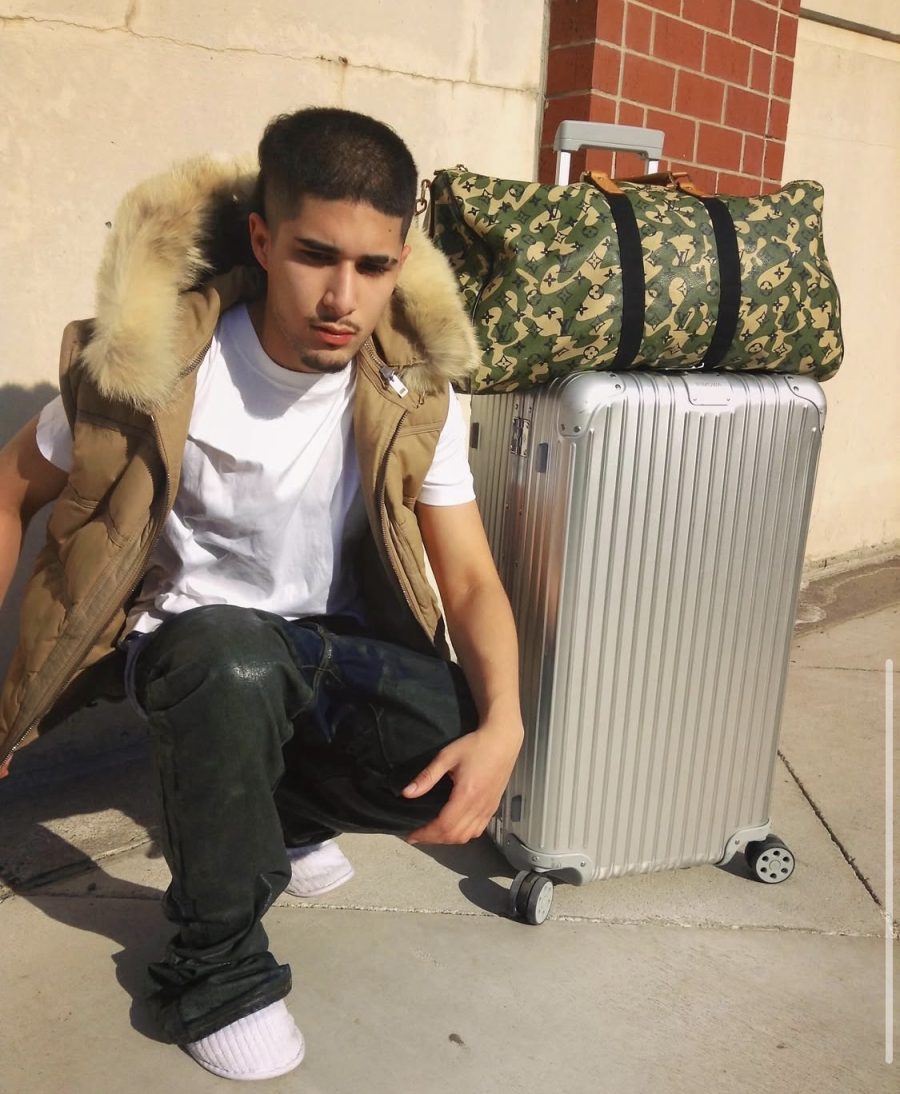
In July 2025, Drake brought fakemink, a 20-year-old rapper from Basildon, Essex, on stage at Wireless Festival. For many in the crowd, it was the first time they had heard his name. Within months, Frank Ocean followed him on Instagram, Playboi Carti invited him to perform in Los Angeles, and SZA shared his song “Truffle”. This looks like an internet success story, but I think the two-step flow theory explains it better.
What is the two-step flow?
In The People’s Choice (1944), Lazarsfeld, Berelson and Gaudet found that media rarely influenced voters directly. Instead, ideas “flow from radio and print to the opinion leaders and from them to the less active sections of the population”. Katz and Lazarsfeld (1955) argued that we are influenced by people we trust, who act as a filter between the media and the public.
Step one: the underground
fakemink first released music as 9090gate and built a small, loyal fanbase in the UK underground. His hook on EsDeeKid’s “LV Sandals” got him noticed by the most active listeners: other artists and fans who follow the scene closely.
Step two: the opinion leaders
The real jump came through co-signs. A co-sign says little about the music itself. It says that someone whose taste you trust thinks this artist matters. Katz (1957) argued that opinion leaders influence us through who they are, what they know and who they know. Frank Ocean, who releases music rarely and is famously selective, is a clear example: when he paid attention, fans spread it through group chats, Reddit and TikTok. Only then did outlets like Complex publish “who is fakemink?” articles, so the mass media followed the opinion leaders, not the other way round.
Limitations
The theory still needs updating. Celebrities are now media themselves: Drake’s Instagram reaches more people than Lazarsfeld’s radio stations, which supports Bennett and Manheim’s (2006) idea of a “one-step flow”. Algorithms also act as gatekeepers, pushing TikTok clips to strangers without any human recommendation. From a culture industry view (Horkheimer and Adorno, 1944), the “underground kid discovered by superstars” story is itself a marketable product, as his appearance in Gucci’s 2026 Milan show suggests.
My own experience
I first heard fakemink on Spotify, and that is how I started to like his music. Nobody recommended him to me; the platform did. In my case, an algorithm played the role of the opinion leader, which supports the idea that the two-step flow is being partly replaced by a more direct, one-step flow.
Conclusion
fakemink’s rise shows that platforms alone don’t make an artist. We usually discover new music through someone we trust. Today that might be a superstar’s Instagram story rather than a neighbour, but personal influence still matters.
References
- Bennett, W. L. and Manheim, J. B. (2006) ‘The one-step flow of communication’, The Annals of the American Academy of Political and Social Science, 608(1), pp. 213–232.
- Horkheimer, M. and Adorno, T. W. (2002 [1944]) Dialectic of Enlightenment. Stanford: Stanford University Press.
- Katz, E. (1957) ‘The two-step flow of communication: an up-to-date report on an hypothesis’, Public Opinion Quarterly, 21(1), pp. 61–78.
- Katz, E. and Lazarsfeld, P. F. (1955) Personal Influence. Glencoe, IL: Free Press.
- Lazarsfeld, P. F., Berelson, B. and Gaudet, H. (1944) The People’s Choice. New York: Duell, Sloan and Pearce.
- Complex (2026) ‘Everything you need to know about fakemink’. Available at: https://www.complex.com/music/a/antonio-johri/fakemink-songs-real-name-new-music
- HotNewHipHop (2025) ‘Who is fakemink?’. Available at: https://www.hotnewhiphop.com/953474-fakemink-who-is-everything-to-know-hip-hop-news


