
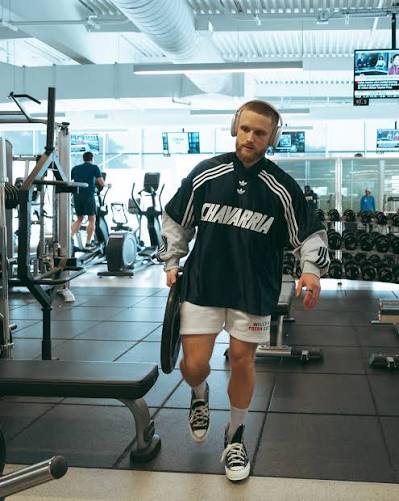

The two-step flow is a theory formulated by sociologists Paul Lazarsfeld, first in the 1944 study “The People’s Choice” and later expanded in the 1955 book “Personal Influence” along with Elihu Katz. The theory suggests that mass media is not directly passed onto the general public. Instead, the theory indicates that mass media first goes through interested individuals also known as opinion leaders, who then interpret and pass on the information to the general public. The flow is a multi-step model which shows that the general population’s decisions, beliefs and decisions are shaped by their respective social groups or opinions leaders rather than the original source of mass media. This blog will be focusing on how gym influencers shape the general public’s view on exercises, diet regimes and healthcare.
Gradually over the years, the gym has become a place where more people can express themselves, work on themselves and become the vision of themselves that they always dreamt to become. As we live in the age of social media, most people who go to gym get their advice from gym influencers rather than a face-to-face coach. Albeit for this topic, a coach would work the same as an influencer; mass media is passed down to both sets of ‘influencers’ and then to the general public. “A person’s membership in different social groups has more influence on that person’s decision-making processes and behaviour than does information from mass media” (Personal Influence, 1955).
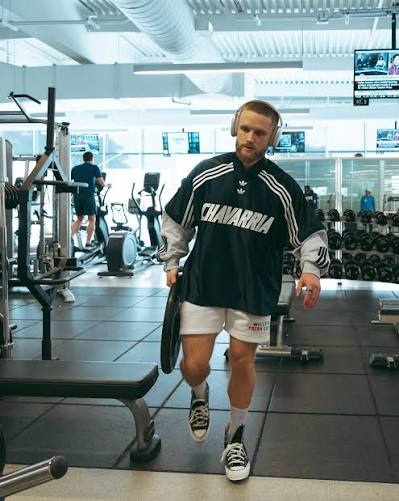
Instead of the public going through scientific data and information, gym influencers interpret the data and create short or long form content, making it easier and more enjoyable for their social communities. Looking at the lens of science-based gym influencers such as Jeff Nippard, who have been on the rise in the recent years would be the perfect example of two-step flow in modern day social media. Step 1: These influencers such as Jeff Nippard first go through recent, reliable scientific articles on lifting and test the ‘experiments’ done in the articles to make sure they’re correct. Step 2: They take data from their own lifting experiments and those done in the scientific articles and create content for their social communities. This content shows Jeff Nippard explaining the articles shortly and showing his own experiments to suggest the best exercises for specific muscle groups based on science. The audiences of these science-based gym influencers trust the data being fed to them. Nowadays, people use social media daily and get most of their daily news from the data being fed to them by influencers.
To conclude, the big question is: Does the two-step flow suggest that people are lazy and take their information from the easiest routes in their social communities rather than the original source? Rather the opposite. Not everyone is going to read direct articles; the opinion leaders help the general public in getting their information. Gym influencers such as Jeff Nippard are actively helping the community by providing factual information that benefits a person’s growth in the gym. The model argues with the older theories that suggest that people take information directly from mass media. With the coming of age, the two-step flow theory is proving to be more of a fact than just a theory.
REFERENCES
- Lazarsfeld, P., Katz, E. (1955) ‘Personal Influence’. Britannica Editors


