
How do audience interpret medium messages?
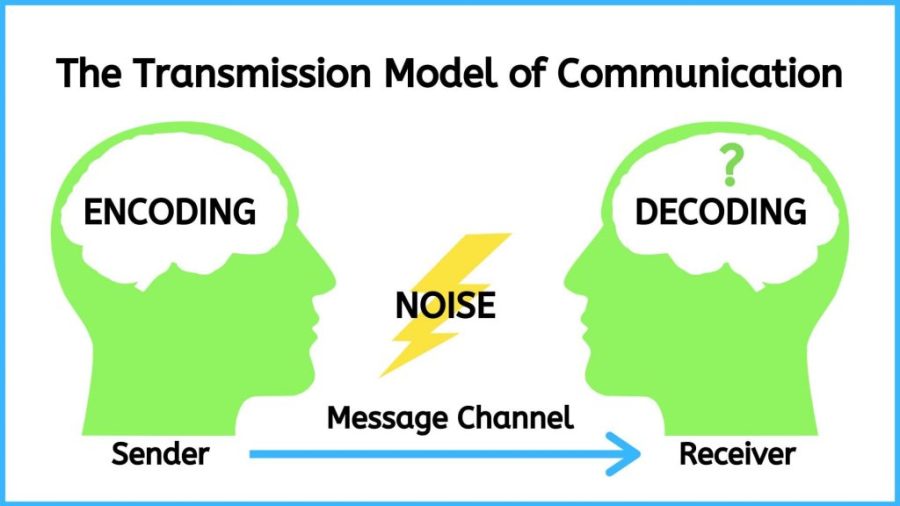
Hall’s explanation of how media texts are produced, circulated, and interpreted this is known as the Encoding & Decoding model. where Encoding is the Production when media producers embed a specific ideology, intent, or preferred meaning into a text using cultural and technical frameworks and Decoding is the Reception where audiences interpret the encoded messages .
Hall then categorized into three distinct reading positions:
- Dominant-Hegemonic Position: acceptance of the preferred meaning completely.
- Negotiated Position: accepts the overall dominant meaning but modifies it to fit their own local or individual experiences.
- Oppositional Position: rejecting the preferred meaning and decodes the message in a directly contrary way.
There were signs.
Ferdinand de Saussure argues that langage is a system of signs made up of 2 key parts which helps enforce :
The Signifier’ and the ‘Signified’ which are interdependent.
– Representation: meaning is derived by the language’s relational system – not directly from things in the world
– Arbitrary link between the signifier and the signified
– Structuralism: Inspired by Ferdinand de Saussure’s conception of languages as systems of relations.
Signifier: The physical form (sound, word, image)
Signified: The mental concept: Flower= Romance/Love or Rugby=England etc.
The Good, The Bad & The End.
Pros: It acknowledges audience members are active participants, instead of being passive consumers who blindly accept media messages. Also Introduces Nuanced Decoding Positions: It provides a structured way to understand audience reactions generating three distinct positions for interpreting messages. overall, explains why different people can watch the exact same news report or movie and walk away with completely opposite interpretations based on their cultural, political, or social backgrounds.
Cons: Only focuses the content and messages ideological meanings ignoring how the specific medium itself changes the way we process information e.g., scrolling on a phone app vs. watching a cinematic movie. Putting more power in how the audience receives a message, downplays how much media conglomerates and algorithms are able manipulate, limit, or force certain interpretations onto viewers. The model still largely views the process as a linear flow from producer to text to consumer. It does not fully capture the chaotic, multi-directional nature of modern, interactive digital media.
To conclude, even though this theorey down plays the role of media produers can manipulate how a message is received and how the it assumes that the process is still linear while ingnoring interactive digital media. it still explains how audience members interperet and receive these messages an d shows that the audeinces are more than just consumers
References:
Hall, S. (1980) ‘Encoding/decoding’, in Hall, S., Hobson, D., Lowe, A. and Willis, P. (eds) Culture, Media, Language: Working Papers in Cultural Studies, 1972-79. London: Hutchinson, pp. 128-138.
Saussure, F. de (1983) Course in General Linguistics. Translated by R. Harris. London: Duckworth.


