

TikTok has become a key platform where beauty influencers share skincare suggestions and shape consumer attitudes towards cosmetic goods. Instead of only trusting official brand advertisements, audiences also value content creators’ opinions and personal experiences. This phenomenon can be examined through the Two-Step Flow Theory (Katz & Lazarsfeld, 1955), which highlights the role of opinion leaders in mediating media messages. While this theory still applies to TikTok-based beauty marketing, online influencers can frame how audiences interpret product information. Even so, influence in today’s digital environment extends beyond interpersonal communication. Recommendation algorithms, commercial incentives and online interactions render modern influence patterns much more complex than the original theory suggests.
The Two-Step Flow Theory developed from the work of Lazarsfeld, Berelson and Gaudet (1944). Katz and Lazarsfeld (1955) developed this theory more fully later. It suggests that media influence can operate through opinion leaders, who can mediate and interpret information for others (Katz & Lazarsfeld, 1955). However, TikTok’s algorithmic recommendation system can influence which videos users encounter, potentially changing the role of opinion leaders and challenging the traditional two-step flow model.
The TikTok creator @natiscart, whose profile name is “I Have a Shopping Addiction”, provides an example of this process. She draws on personal experience and product demonstrations to promote skincare products to her audience. In her video, she introduces a skincare product by stating “Koreans are gatekeeping this”. This creates a sense of curiosity and exclusivity, encouraging viewers to pay attention to the product. By explaining the product verbally and showcasing it visually, Natiscart functions as an opinion leader who interprets product information for her audience. Her role therefore reflects the two-step flow process, as product information is presented through the influencer before reaching and influencing viewers.
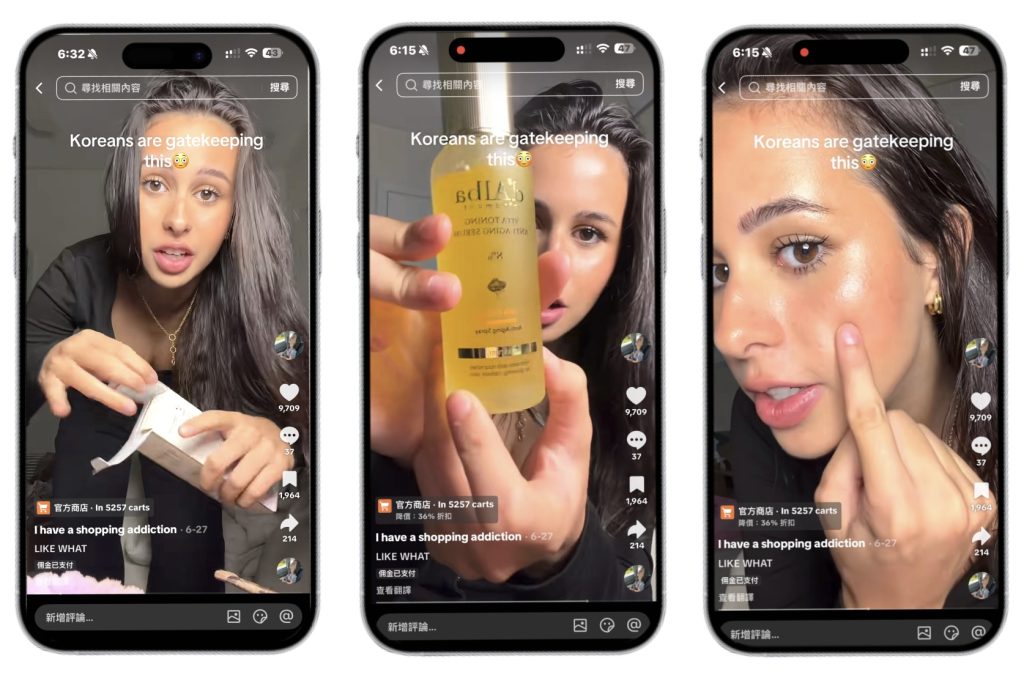
However, this case also exposes the limitations inherent within the traditional Two-Step Flow Theory. Influencers do not constitute the sole source of persuasive influence, as TikTok’s algorithm shapes content visibility and distribution. Furthermore, the video incorporates commercial elements such as a product link and commission disclosure, which may influence how audiences interpret the recommendation. The video received 9,709 likes and 1,964 saves. However, these numbers alone cannot show whether viewers believed the influencer’s claims or purchased the product. Yang et al. (2024) show that engagement in TikTok influencer advertising can be linked to sales performance, but engagement alone does not necessarily reflect how engaging the product itself is. Audiences are also active participants who can like, comment, save, share and create responsive content. Therefore, while the Two-Step Flow Theory remains useful for understanding influencers as opinion leaders, it needs to be adapted to account for algorithms, commercial relationships and active audiences in contemporary digital media.
References
Katz, E. and Lazarsfeld, P.F. (1955) Personal Influence: The Part Played by People in the Flow of Mass Communications. New York: Free Press.
Lazarsfeld, P.F., Berelson, B. and Gaudet, H. (1944) The People’s Choice: How the Voter Makes Up His Mind in a Presidential Campaign. New York: Duell, Sloan and Pearce.
Yang, J., Zhang, J. and Zhang, Y. (2024) ‘Engagement That Sells: Influencer Video Advertising on TikTok’. Marketing Science. doi:10.1287/mksc.2021.0107.


